

 English
 Español
 Português
 Русский
 Bahasa Indonesia
 Français
 Türkçe
 Bahasa Melayu
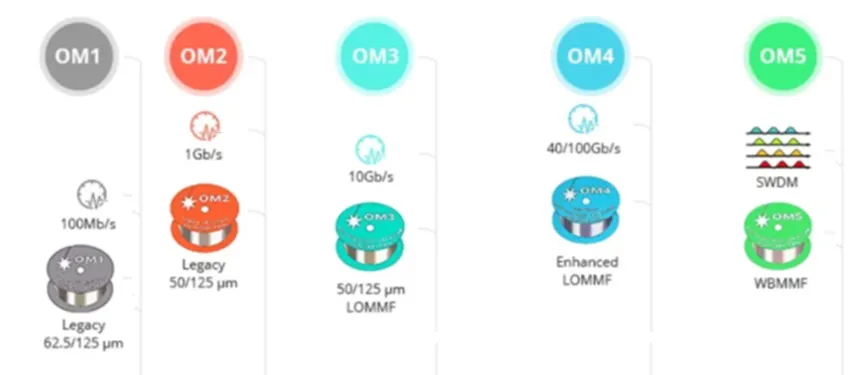
الألياف المتعدد هو نوع من الألياف المستخدمة لنقل لمسافات قصيرة ويوجد عادة في شبكات الحرم الجامعي ، الشبكات المحلية للمؤسسات ، ومراكز البيانات. حاليا ، خمسة أنواع من الألياف المتعدد المتاحة في السوق تشمل OM1 ، OM2 ، OM3 ، OM4 ، و OM5 ، ولكل منها قدرات نقل البيانات متفاوتة. مع العديد من أنواع مختلفة من الألياف المتعدد ، هل أنت غارقة في الاختيار ؟ سوف تركز هذه المقالة على الاختلافات بين ألياف OM1 و OM2 و OM3 و OM4 و OM5. ونحن نعتقد أنه بعد قراءة هذه المقالة ، سيكون لديك فهم أوضح لعملية الاختيار للألياف المتعدد.
أنواع الألياف المتعددة والاختلافات
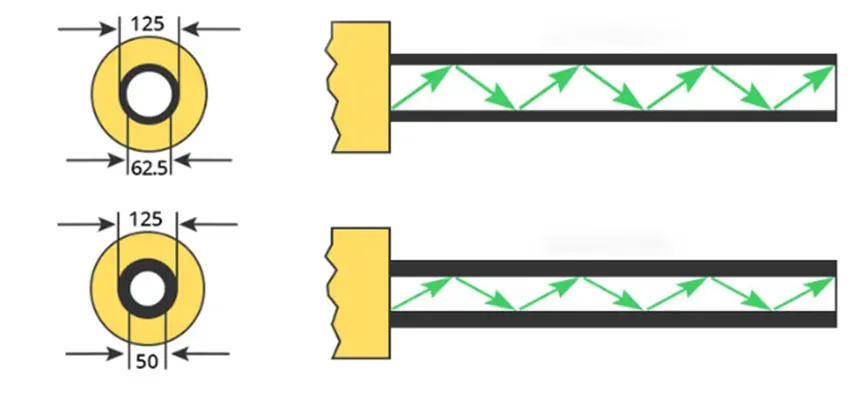
بالمقارنة مع الألياف الضوئية أحادية الوضع ، فإن الألياف الضوئية متعددة الأوضاع لها قطر أساسي أكبر ، عادة 50 ميكرون أو 62.5 ميكرون ، وتدعم انتشار الوضع البصري المتعدد. وفقًا لمعيار ISO 11810 ، تنقسم الألياف الضوئية متعددة الأوضاع إلى ألياف بصرية OM1 و OM2 و OM3 و OM4 و OM5.
تشير الألياف OM1 إلى الألياف متعددة الأوضاع مع نافذة حقن كاملة تبلغ 850 / 1300 نانومتر وعرض نطاق ترددي يبلغ 200 / 500MHz.km أو أعلى. يستخدم مصدر ضوء LED ، ويبلغ قطره الأساسي 62.5 ميكرون ، وعادة ما يكون مطليًا باللون البرتقالي. يمكن استخدامه لسرعات Ethernet أقل من 10 جيجابت في الثانية وهو الأكثر استخدامًا في 100M Ethernet. نظرًا لقطرها الأساسي الأكبر ، تتمتع ألياف OM1 بقدرات أقوى لجمع الضوء وأكثر مقاومة للانحناء.
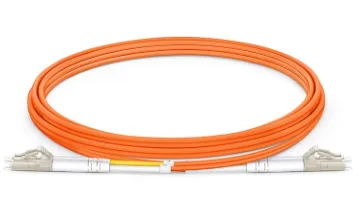
تشير الألياف OM2 إلى الألياف متعددة الأوضاع مع نافذة حقن كاملة تبلغ 850 / 1300 نانومتر وعرض نطاق ترددي يبلغ 500 / 500MHz.km أو أكثر. يستخدم مصدر ضوء LED ، ويبلغ قطره الأساسي 50 ميكرومتر ، وعادة ما يكون مطليًا باللون البرتقالي. يمكن استخدامه لخدمات Ethernet حتى 10 جيجابت في الثانية وهو الأكثر استخدامًا في Gigabit Ethernet. بالمقارنة مع الألياف OM1 ، فإن ألياف OM2 لها قطر أساسي أصغر ، مما يقلل بشكل فعال من التشتت النموذجي للألياف متعددة الأوضاع ، مما يؤدي إلى زيادة عرض النطاق الترددي وخفض تكاليف الإنتاج بمقدار الثلث.
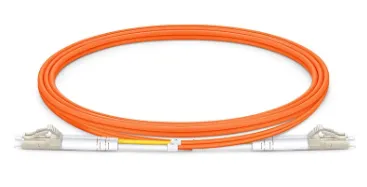
الألياف OM3 عبارة عن ألياف متعددة الأوضاع محسّنة بالليزر. ويستخدم مصدر ليزر VCSEL 850nm ، ويبلغ قطره الأساسي 50 ميكرون ، وغمد خارجي أزرق مائي. يمكن استخدامه لسرعات نقل Ethernet أقل من 100 جيجابت في الثانية وهو الأكثر استخدامًا في 10 جيجابت. بالمقارنة مع الألياف OM1 و OM2 ، يوفر OM3 معدلات نقل وعرض نطاق ترددي أعلى ، وبالتالي يُعرف أيضًا باسم الألياف متعددة الأوضاع المحسّنة أو الألياف متعددة الأوضاع 10GbE.
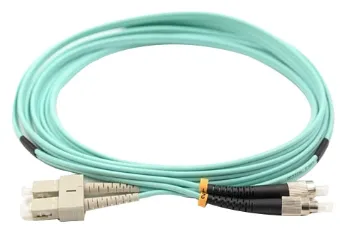
4. الألياف OM4 هي نسخة مطورة من الألياف متعددة الأوضاع OM3 ، تقدم أداءً فائقًا. على سبيل المثال ، توفر ألياف OM4 أكثر من ضعف عرض النطاق الترددي الفعال لألياف OM3 وهي متوافقة مع ألياف OM3. غمدها الخارجي أزرق مائي. في شبكات إيثرنت التي تتجاوز 10 جيجابت في الثانية ، يمكن لألياف OM4 أن تنقل مسافة أبعد من ألياف OM3 ، وتصل إلى 400 متر.
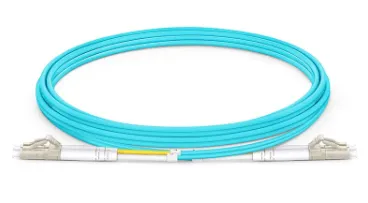
5. الألياف OM5 عبارة عن ألياف متعددة الوسائط عريضة النطاق تم إطلاقها حديثًا ومتوافقة مع ألياف OM4. قطرها الأساسي هو نفس الألياف OM2 / OM3 / OM4 (50μm) وغمدها الخارجي هو الليمون الأخضر.
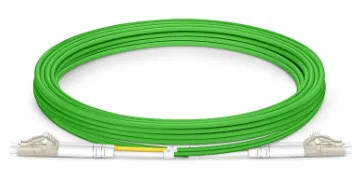
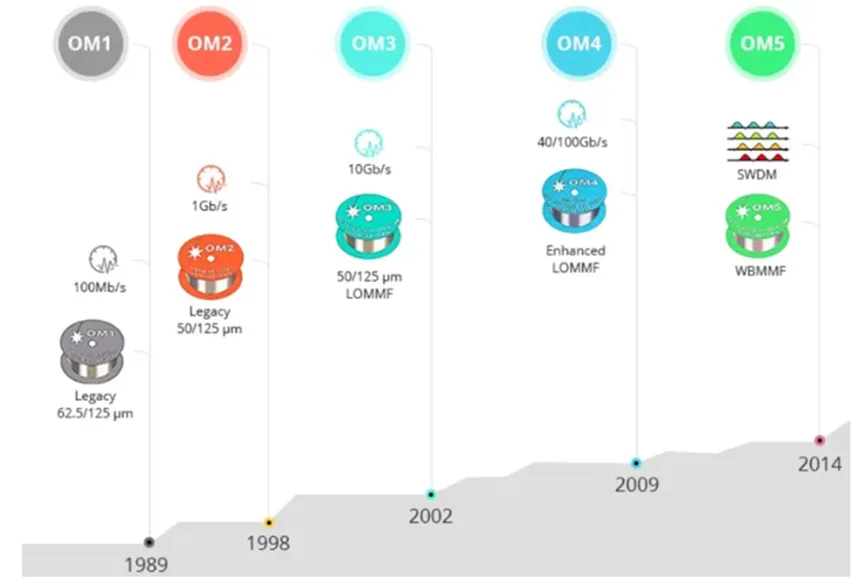
باختصار ، يكمن الاختلاف الأكبر بين الألياف الضوئية متعددة الأوضاع OM1 و OM2 و OM3 و OM4 و OM5 في الاختلافات في الفيزياء والتطبيق.
1. الاختلافات المادية
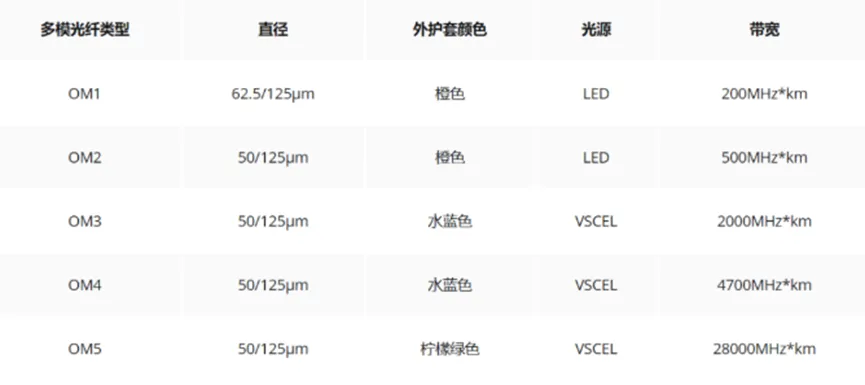
الألياف البصرية متعددة الأوضاع المختلفة لها اختلافات فيزيائية مختلفة ، تنعكس بشكل رئيسي في القطر ولون الغمد الخارجي ومصدر الضوء وعرض النطاق الترددي ، كما هو موضح في الجدول التالي:
2. الاختلافات التطبيق
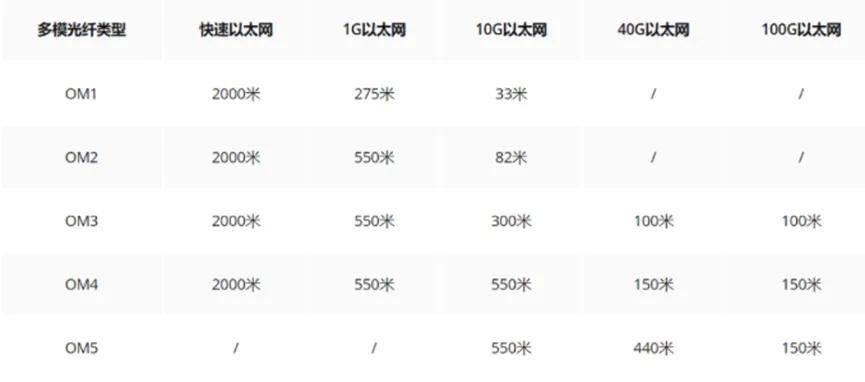
تُستخدم ألياف بصرية متعددة الأوضاع مختلفة في شبكات إيثرنت مختلفة وتدعم مسافات إرسال قصوى مختلفة ، كما هو موضح في الجدول التالي:
اتجاهات التنمية وتطبيقات الألياف المتعدد
مدفوعة بمتطلبات تطبيقات الشبكة عالية السرعة ، تتطور الألياف متعددة الأوضاع نحو خسارة منخفضة وعرض نطاق ترددي عالٍ وتعدد إرسال متعدد الأطوال الموجية. مع التقدم المستمر لتكنولوجيا الألياف ، تطورت الألياف متعددة الأوضاع من ألياف OM1 الأصلية إلى ألياف OM5 الحالية التي تدعم شبكات 40 / 100G ، مما يوفر أداءً أفضل.
اليوم ، يتم استخدام الألياف متعددة الأوضاع OM1 و OM2 بشكل أساسي لروابط 1G Ethernet داخل غرف الكمبيوتر ، في حين يتم استخدام الألياف متعددة الأوضاع OM3 و OM4 بشكل أساسي لكابلات الألياف لمركز البيانات 10G / 40G. الألياف متعددة الأوضاع OM5 مناسبة لنقل رابط Ethernet عالي السرعة 40G / 100G. بالمقارنة مع الألياف متعددة الأوضاع OM1 / OM2 / OM3 / OM4 ، توفر الألياف متعددة الأوضاع OM5 قابلية أكبر للتوسع والمرونة ، مما يدعم نقل الشبكة بسرعة أعلى مع عدد ألياف أصغر. تكلفتها واستهلاكها للطاقة أقل بكثير من تلك الخاصة بالألياف أحادية الوضع. يشير هذا إلى أنه من المحتمل استخدام الألياف متعددة الأوضاع OM5 على نطاق واسع في مراكز بيانات 100G / 400G / 1T فائقة الضخامة في المستقبل.
أسئلة وأجوبة حول الألياف المتعدد
1. ما هو الفرق بين الألياف المتعددة والألياف أحادية الوضع ؟
قطر الأساسية: الألياف المتعدد لديه قطر الأساسية أكبر (عادة 50/62.5 ميكرون) ويمكن أن تنقل وسائط متعددة من الضوء. الألياف أحادية الوضع لديها قطر الأساسية أصغر (عادة 9 ميكرون) ويمكن أن تنقل سوى وضع واحد من الضوء.
Bandwidth: عادةً ما يكون عرض النطاق الترددي للألياف أحادية الوضع أعلى من الألياف متعددة الأوضاع ، ويمكن أن يصل إلى 100000 جيجاهرتز.
مصدر الضوء: تستخدم الألياف الضوئية متعددة الأوضاع عمومًا مصدر ضوء LED ، بينما تستخدم الألياف الضوئية أحادية الوضع عمومًا مصدر ضوء الليزر.
Distance: الألياف المتعدد مناسبة لتطبيقات المسافات القصيرة ، ويمكن أن تصل مسافة الإرسال القصوى عادة إلى 550 متر.
التكلفة: الألياف المتعدد يكلف عموما أقل من الألياف وضع واحد.
2. أنواع موصل الألياف البصرية المتعدد
حاليًا ، تشتمل موصلات الألياف البصرية متعددة الأوضاع الشائعة (أي الموصلات) على ST و SC و FC و LC و MU و E2000 و MTRJ و SMA و DIN و MTP & MPO. تعد ST و SC و FC و LC و MTP / MPO أكثر أنواع موصلات الألياف البصرية شيوعًا. هذه الأنواع الخمسة من موصلات الألياف البصرية لها مزايا وعيوب ووظائف مختلفة. إذن ، ما هي الاختلافات بينهما ؟ يسرد الجدول التالي الاختلافات بين موصلات الألياف متعددة الأوضاع ST و SC و FC و LC و MTP / MPO من حيث حجم الطويق وفقدان الإدراج والجوانب الأخرى:
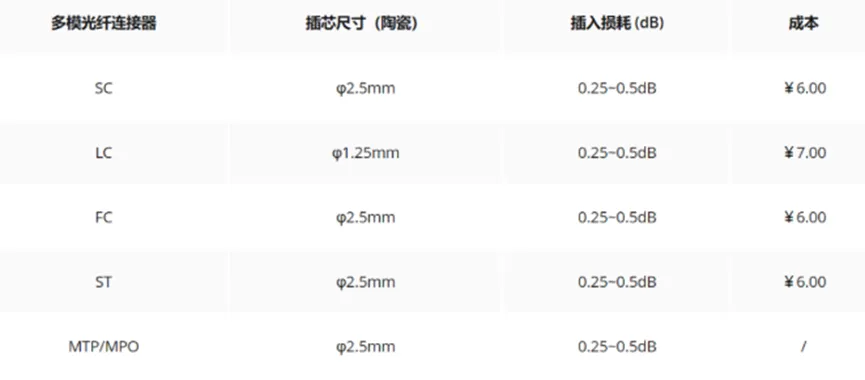
ملاحظة: الطويق هو العنصر الأسطواني المحاذي بدقة في قابس موصل الألياف البصرية ، مع وجود ثقب مجهري في مركزه لتأمين الألياف الضوئية. اعتمادًا على المواد المستخدمة ، يمكن تصنيف الطويق على أنه سيراميك أو زجاج أو بلاستيك أو معدن.
3. مزايا الألياف متعددة
على الرغم من أن الألياف أحادية الوضع لها مزايا في عرض النطاق الترددي ومسافة الإرسال ، إلا أن الألياف متعددة الأوضاع يمكنها دعم متطلبات مسافة الإرسال لمعظم التطبيقات الداخلية ومراكز البيانات ، وتكاليف التركيب والصيانة أقل بكثير من الألياف أحادية الوضع. بالإضافة إلى ذلك ، تتمتع الألياف متعددة الأوضاع ببعض المزايا المهمة ، كما هو موضح أدناه:
A ضياع ، خالية من التداخل ، شبكة العمود الفقري متعدد المستخدمين: إن أعظم سمة من الألياف متعددة الأوضاع هي قدرتها على حمل إشارات ضوئية متعددة في وقت واحد على نفس الرابط. الأهم من ذلك ، قوة الإشارة الضوئية هي ضياع تقريبا. لذلك ، يمكن لمستخدمي الشبكة إرسال حزم بيانات متعددة في وقت واحد عبر سلك تصحيح ألياف متعدد الأوضاع ، وسيتم نقل جميع المعلومات بشكل آمن إلى وجهتها دون أي تدخل وسليمة.
دعم لبروتوكولات متعددة: الألياف المتعدد يدعم مجموعة متنوعة من بروتوكولات نقل البيانات ، بما في ذلك إيثرنت ، إنفينيباند ، وبروتوكول الإنترنت. لذلك ، تعتبر الألياف المتعدد الأساس لتنفيذ التطبيقات الأساسية.
4. هل يمكن استخدام الألياف الضوئية متعددة الأوضاع كطريقة واحدة ؟
لا ، نظرًا لأن الألياف الضوئية متعددة الأوضاع لها تشتت وفقدان كبيران ، لا يمكن إرسال الإشارات الضوئية عبر مسافات طويلة على الألياف الضوئية متعددة الأوضاع.


