

 Español
 Português
 لالعربية
 Русский
 Bahasa Indonesia
 Français
 Türkçe
 Bahasa Melayu

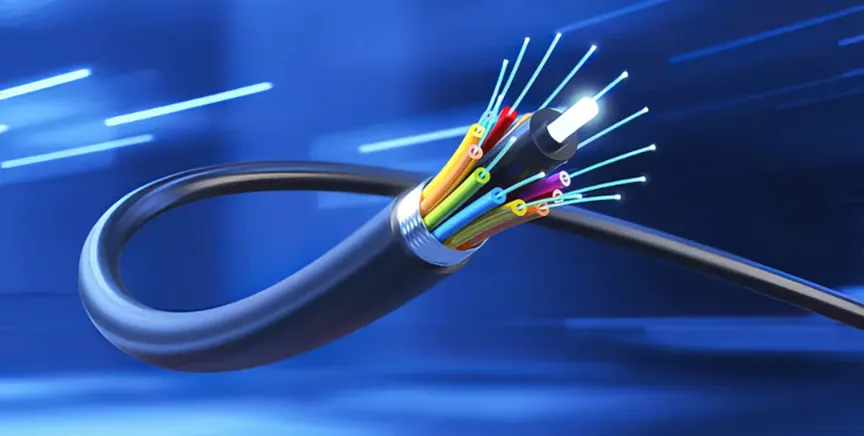
Fiber optics are widely employed for communication and data transmission. The number of cores in a fiber optic cable significantly influences its performance and determines its suitable applications. This article will explore the differences among single-core, dual-core, and multi-core fiber optic cables, along with their respective uses.
Single-core fiber optic cable utilize a single strand of glass fiber and are predominantly used for long-distance communication. Their simple structure allows for straightforward installation and management, while also making them one of the most cost-effective options to manufacture. Thanks to their high bandwidth and low signal attenuation, they are ideally suited for telecommunications networks, ISP backbones, and point-to-point data center connections.
By consolidating 3 to 12 cores into a single cable, multi-core fibers deliver a substantial boost in data transmission rates and capacity. This design supports simultaneous multi-channel data flow, enhancing network efficiency and enabling easy future expansion. They are predominantly used in high-demand environments such as data centers, cloud computing platforms, high-performance computing (HPC), and modern telecommunication infrastructure.
Selecting the appropriate fiber optic cable—be it single-core, dual-core, or multi-core—is a decision dictated by specific application requirements. To summarize, single-core excels in cost-effective long-distance links, dual-core provides valuable redundancy and bidirectional flexibility, while multi-core delivers maximum capacity for data-intensive environments. A clear understanding of these distinctions is key to making a strategic investment that ensures both optimal performance and future scalability, whether you are upgrading an existing network or deploying a new one.


