

 Español
 Português
 لالعربية
 Русский
 Bahasa Indonesia
 Français
 Türkçe
 Bahasa Melayu
Preface
Optical fiber, a fragile material, must undergo processing to provide sufficient mechanical strength to adapt to various environments. This treatment protects the fiber from external forces during installation, operation, and maintenance, thus ensuring stable network operation. However, many outdoor and indoor optical cables lack adequate protection in challenging environments, leading to the design of armored optical cables to address this issue.
1. Overview of Armored Fiber Optic Cable
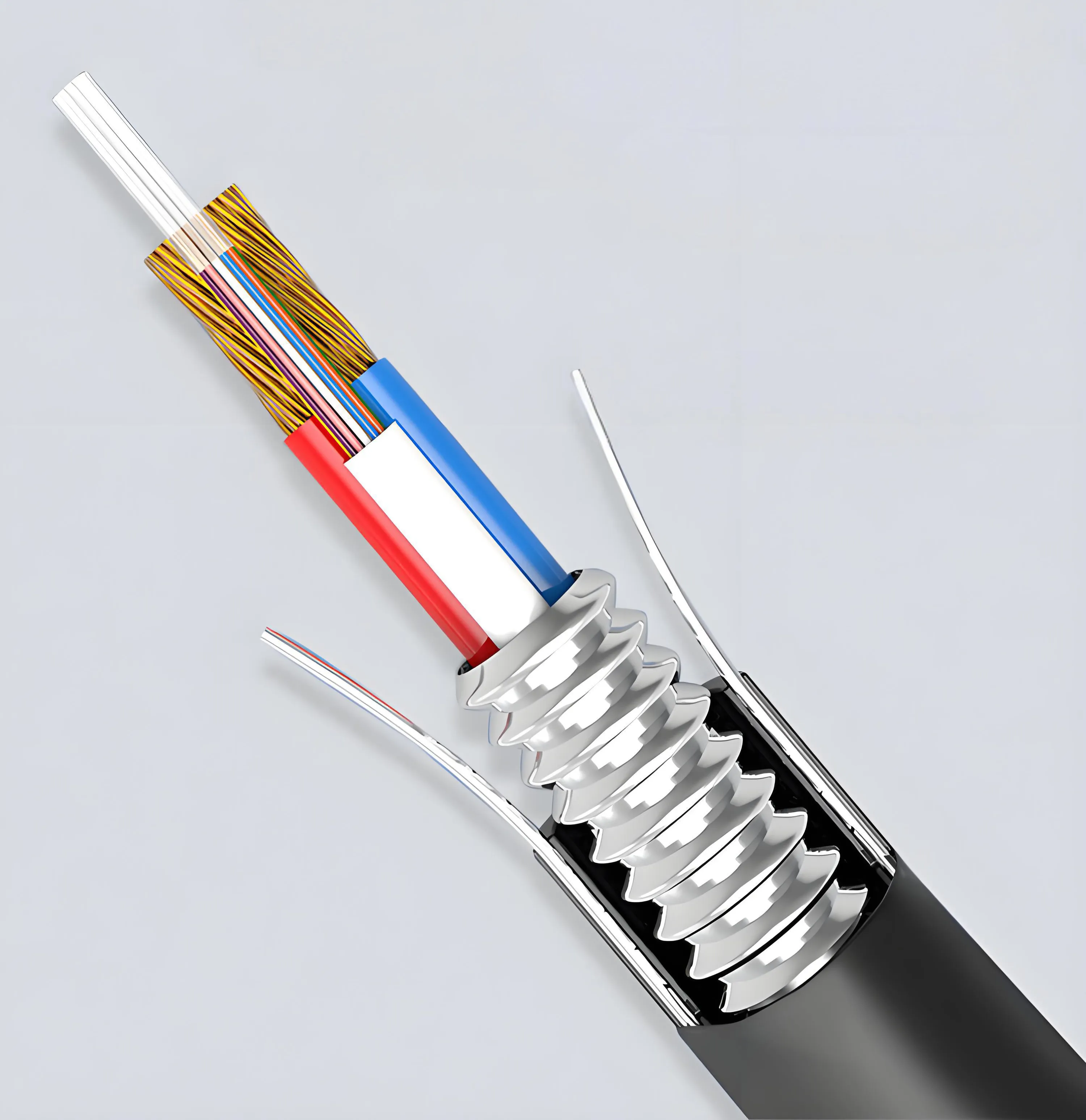
As the name suggests, armored optical cable refers to a layer of metal "armor" installed on the outer layer of the optical cable. The function of this armor layer is to prevent the optical fiber from being bitten by animals, moisture, or other external damage.
2. Why choose armored fiber optic cable?
Traditionally, outdoor optical cables are placed in heavy-duty conduits to protect them from damage. However, this installation method is complicated, time-consuming, labor-intensive, and expensive. To simplify this process, designers incorporated a layer of metal armor into the cables. This design not only increases the fiber's compressive and tensile strength but also allows for flexible use in harsh environments. Today, armored optical cables are widely used in the optical communications industry.
3. The Structure of Armored Fiber Optic Cable
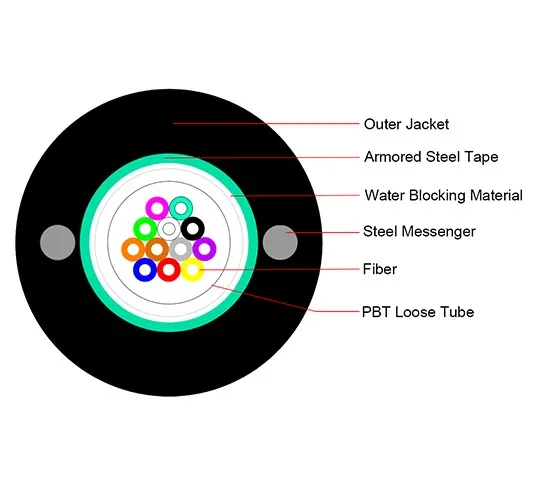
Outer Sheath
The outer jacket is the first line of defense for armored fiber optic cables, effectively protecting them from solvents and physical abrasion. Typically, the outer jacket is made of a plastic material, such as polyethylene.
Metal Armor
The metal armor is located between the outer and inner jackets to protect against cutting, chewing, and burning. It also protects the cable from stretching during installation. These armors are typically made of strong metallic materials.
Inner Sheath
The inner sheath protects the fiber optic cable and is typically made of protective and flame-retardant materials. Simply put, the cable's buffer layer is typically composed of aramid yarn, a polyethylene sheath, and corrugated steel tape, ensuring its durability.
4. Types of Armored Fiber Optic Cables
Armored optical cables can be divided into different categories according to their application and shielding type.
Indoor Armored Optical Cable
Indoor armored optical cables are available in two types: single-layer and double-layer armored. Double-layer armored optical cables are commonly used in near-shore and shallow-water environments, while single-layer armored optical cables are suitable for other general environments.
Outdoor Armored Optical Cable
Outdoor armored optical cables can be divided into light-duty and heavy-duty types. Heavy-duty armored optical cables are mainly used in riverbeds and seabeds, so they are relatively expensive, while light-duty armored optical cables are more economical and practical.
Interlocking Armored Optical Cable
Interlocking armored optical cables are made of aluminum shielding material and are suitable for both indoor and outdoor environments. They are characterized by high durability and strong pressure resistance.
Corrugated Armored Optical Cable
Corrugated armored cables are made of steel tape and are typically used in outdoor environments. They have excellent mechanical properties and are effectively rodent-resistant.
5. Application of Armored Fiber Optic Cable
Depending on the installation environment, armored optical cables can be divided into two types: loose-buffered and tight-buffered. Loose-buffered armored optical cables are generally used outdoors, while tight-buffered armored optical cables are suitable for indoor or mixed indoor-outdoor environments.
Indoor Armored Optical Cable
Indoor armored fiber optic cables typically feature an interconnected metal armor and an outer sheath made of halogen-free, low-smoke material. They are widely used in telecommunication networks.

Outdoor armored optical cable
Outdoor armored optical cables usually use corrugated armor, which has high tensile strength, compression resistance and rodent resistance, and is suitable for use in harsh environments.

VI. Summary
In modern fiber-optic communications, any fiber failure can result in significant financial losses, making protecting the integrity of the fiber crucial. Armored fiber optic cables, by adding a protective metal layer to the fiber, effectively meet requirements for protection against animal bites, moisture, and stretch, making them an indispensable component of modern communications systems.


