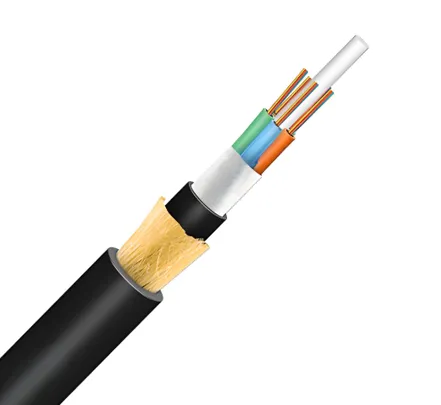
Cable ADSS: Aplicación de cable óptico ADSS totalmente dieléctrico autoportante en el sistema de comunicación de energía

2025-09-15


 Cable ADSS: Aplicación de cable óptico ADSS totalmente dieléctrico autoportante en el sistema de comunicación de energía第1张

         ADSS Todo el cable de fibra óptica autoportante dieléctrico El cable ADSS para abreviar se usa ampliamente en líneas de transmisión de nivel de voltaje de 220kV, 110kV y 35kV, y generalmente se usa en líneas existentes. 


Todo dieléctrico significa que el cable óptico está hecho de materiales totalmente dieléctricos, y autoportante significa que los propios componentes de refuerzo del cable óptico pueden soportar su propio peso y cargas externas. 


El nombre señala el entorno de uso de este cable óptico y sus tecnologías clave: debido a que es autoportante, su resistencia mecánica es de gran importancia; todos los materiales dieléctricos se utilizan porque el cable óptico se encuentra en un entorno de alta tensión y fuerte electricidad y debe ser capaz de soportar la influencia de la electricidad fuerte; debido a que se usa sobre la cabeza en una torre de poste eléctrico, debe tener colgadores que coincidan para fijar el cable óptico en la torre de poste.
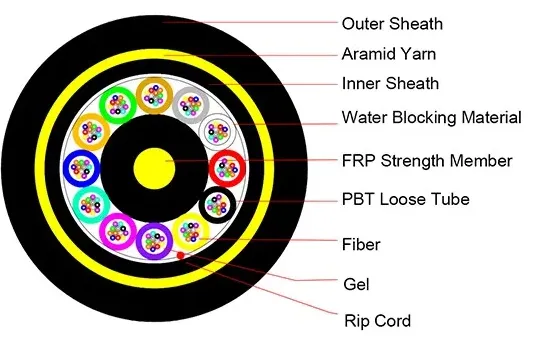


Cable ADSS: Aplicación de cable óptico ADSS totalmente dieléctrico autoportante en el sistema de comunicación de energía第2张

Debido a que los cables ópticos ADSS se instalan junto a las líneas eléctricas de alta tensión, su superficie no solo debe ser resistente a los rayos UV como los cables ópticos convencionales, sino que también debe soportar las demandas a largo plazo de los entornos de alta tensión y alta tensión. 


El acoplamiento capacitivo entre el cable óptico y la línea de fase de alta tensión, así como entre el cable y la tierra, genera diferentes potenciales espaciales en la superficie del cable. 


En presencia de lluvia, nieve, escarcha y polvo, esta diferencia de potencial hace que las corrientes de fuga fluyan a través de la superficie húmeda y sucia del cable. 


El efecto térmico resultante hace que la humedad se evapore de ciertas áreas de la superficie del cable. Esta evaporación transitoria interrumpe la corriente de fuga, generando arcos y calor significativo. Este calor acumulado quema la superficie del cable, dejando rastros en forma de árbol conocidos como seguimiento eléctrico. 


Con el tiempo, la funda exterior se deteriora y las propiedades mecánicas del hilo de aramida se deterioran, lo que finalmente conduce a la rotura del cable. 


Este problema se aborda desde dos perspectivas primarias. En primer lugar, se utiliza un material especial de funda anti-seguimiento para extruir la funda exterior fuera del hilo de aramida, es decir, la funda anti-seguimiento AT se utiliza para reducir la corrosión de seguimiento eléctrico de la superficie del cable óptico causada por la fuerte electricidad;


 Además, la distribución del potencial espacial en la torre de energía se calcula a través de un software profesional y se dibuja el mapa de distribución de la intensidad del campo eléctrico. 


En base a esta base científica, se determina el punto de suspensión específico del cable óptico en la torre para evitar que el cable óptico se vea afectado por un campo eléctrico más fuerte. 


Los cables ópticos ADSS utilizan diferentes fundas para diferentes rutas eléctricas. Las dos fundas ADSS más comunes son la funda de PE y la funda AT. La funda de PE, una funda de polietileno ordinaria, se utiliza para líneas eléctricas de 350KV y menos. La funda AT, una funda anti-seguimiento, se utiliza para líneas eléctricas de 110KV y superiores.


Consulta de productos

We use cookie to improve your online experience. By continuing to browse this website, you agree to our use of cookie.

Cookies

Please read our Terms and Conditions and this Policy before accessing or using our Services. If you cannot agree with this Policy or the Terms and Conditions, please do not access or use our Services. If you are located in a jurisdiction outside the European Economic Area, by using our Services, you accept the Terms and Conditions and accept our privacy practices described in this Policy.
We may modify this Policy at any time, without prior notice, and changes may apply to any Personal Information we already hold about you, as well as any new Personal Information collected after the Policy is modified. If we make changes, we will notify you by revising the date at the top of this Policy. We will provide you with advanced notice if we make any material changes to how we collect, use or disclose your Personal Information that impact your rights under this Policy. If you are located in a jurisdiction other than the European Economic Area, the United Kingdom or Switzerland (collectively “European Countries”), your continued access or use of our Services after receiving the notice of changes, constitutes your acknowledgement that you accept the updated Policy. In addition, we may provide you with real time disclosures or additional information about the Personal Information handling practices of specific parts of our Services. Such notices may supplement this Policy or provide you with additional choices about how we process your Personal Information.


Cookies

Cookies are small text files stored on your device when you access most Websites on the internet or open certain emails. Among other things, Cookies allow a Website to recognize your device and remember if you've been to the Website before. Examples of information collected by Cookies include your browser type and the address of the Website from which you arrived at our Website as well as IP address and clickstream behavior (that is the pages you view and the links you click).We use the term cookie to refer to Cookies and technologies that perform a similar function to Cookies (e.g., tags, pixels, web beacons, etc.). Cookies can be read by the originating Website on each subsequent visit and by any other Website that recognizes the cookie. The Website uses Cookies in order to make the Website easier to use, to support a better user experience, including the provision of information and functionality to you, as well as to provide us with information about how the Website is used so that we can make sure it is as up to date, relevant, and error free as we can. Cookies on the Website We use Cookies to personalize your experience when you visit the Site, uniquely identify your computer for security purposes, and enable us and our third-party service providers to serve ads on our behalf across the internet.

We classify Cookies in the following categories:
 ●  Strictly Necessary Cookies
 ●  Performance Cookies
 ●  Functional Cookies
 ●  Targeting Cookies


Cookie List
A cookie is a small piece of data (text file) that a website – when visited by a user – asks your browser to store on your device in order to remember information about you, such as your language preference or login information. Those cookies are set by us and called first-party cookies. We also use third-party cookies – which are cookies from a domain different than the domain of the website you are visiting – for our advertising and marketing efforts. More specifically, we use cookies and other tracking technologies for the following purposes:

Strictly Necessary Cookies
These cookies are necessary for the website to function and cannot be switched off in our systems. They are usually only set in response to actions made by you which amount to a request for services, such as setting your privacy preferences, logging in or filling in forms. You can set your browser to block or alert you about these cookies, but some parts of the site will not then work. These cookies do not store any personally identifiable information.

Functional Cookies
These cookies enable the website to provide enhanced functionality and personalisation. They may be set by us or by third party providers whose services we have added to our pages. If you do not allow these cookies then some or all of these services may not function properly.

Performance Cookies
These cookies allow us to count visits and traffic sources so we can measure and improve the performance of our site. They help us to know which pages are the most and least popular and see how visitors move around the site. All information these cookies collect is aggregated and therefore anonymous. If you do not allow these cookies we will not know when you have visited our site, and will not be able to monitor its performance.

Targeting Cookies
These cookies may be set through our site by our advertising partners. They may be used by those companies to build a profile of your interests and show you relevant adverts on other sites. They do not store directly personal information, but are based on uniquely identifying your browser and internet device. If you do not allow these cookies, you will experience less targeted advertising.

How To Turn Off Cookies
You can choose to restrict or block Cookies through your browser settings at any time. Please note that certain Cookies may be set as soon as you visit the Website, but you can remove them using your browser settings. However, please be aware that restricting or blocking Cookies set on the Website may impact the functionality or performance of the Website or prevent you from using certain services provided through the Website. It will also affect our ability to update the Website to cater for user preferences and improve performance. Cookies within Mobile Applications

We only use Strictly Necessary Cookies on our mobile applications. These Cookies are critical to the functionality of our applications, so if you block or delete these Cookies you may not be able to use the application. These Cookies are not shared with any other application on your mobile device. We never use the Cookies from the mobile application to store personal information about you.

If you have questions or concerns regarding any information in this Privacy Policy, please contact us by email at . You can also contact us via our customer service at our Site.