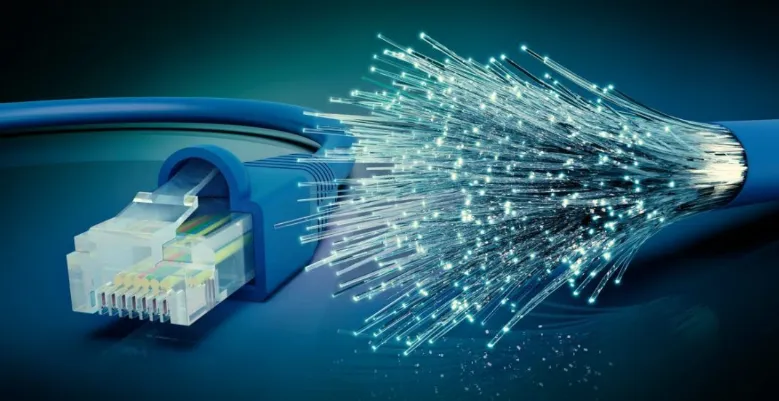
Diferencias entre el cable de red regular y el cable lan de fibra óptica

2025-10-20

Diferencias entre el cable de red regular y el cable lan de fibra óptica第1张

¿Cuál es la diferencia entre los cables de red normales y los cables de fibra óptica? 

Los medios de transmisión de red se conocen comúnmente como cables de red. Como todos sabemos, hay tres tipos principales de transmisión de red: 1. Cable coaxial; 2. Cable de red; y 3. Cable de fibra óptica vs. cable de red regular:


Diferencias entre cables de fibra óptica y cables de red

1. Diferentes propiedades: Los cables de fibra óptica y los cables de red difieren en propiedades, pero, en el fondo, son distintos. Los cables de fibra óptica son un concepto abstracto, que representa la velocidad de transmisión de información dinámica; mientras que los cables de red son un medio, un portador de transmisión de información.

2. Diferentes funciones: los cables de fibra óptica se utilizan para acelerar la transmisión de diversa información de red; mientras que los cables de red se utilizan para conectar dispositivos, mejorando la eficiencia de la transmisión de información de red entre ellos.

3. Diferentes formas de existencia: Anteriormente existían de diferentes maneras. Los cables de fibra óptica existían de forma virtual, sin objeto físico; mientras que los cables de red son tangibles, cables de hormigón.


¿Cómo reconectar un cable de fibra óptica roto?

1. Al conectar cables de fibra óptica, conéctelos en orden: cables del mismo color y núcleo, de mayor a menor. 2. Al realizar conexiones, pele el cable óptico. Tenga cuidado de no dañar el tubo del haz. Después de pelar aproximadamente 1 metro, aparecerá un poco de grasa en el interior. Límpialo con con papel higiénico.

3. Quite la fibra óptica e insértela en la caja de empalme, asegurándola y apretándola.

4. Pase la fibra óptica a través del tubo termorretráctil.

5. Encienda la alimentación y realice el empalme con del empalmador de fusión. Tenga cuidado de evitar que el polvo y la fibra óptica caigan en el empalmador.


Escenarios De Aplicación De Fibra Óptica Y Cables De Red

1. Escenarios de aplicación de fibra óptica: La fibra óptica se utiliza principalmente para comunicaciones de banda ancha, proporcionando a los usuarios con información multimedia interactiva como video, gráficos, comunicación y datos. Los ejemplos incluyen videoconferencia, juegos interactivos en línea y videovigilancia remota.

2. Escenarios de aplicación de cables de red: Los cables de red se utilizan para conectar dispositivos y se utilizan principalmente para el cableado de ingeniería, la conectividad de red y la conexión de sistemas de puertos de dispositivos. Los ejemplos incluyen conmutadores, concentradores, cortafuegos y otros dispositivos. Velocidades de transmisión de cables de fibra óptica y de red:

La categoría 7, el mejor cable de red, tiene una frecuencia de transmisión de al menos 500 MHz, más del doble que los cables de categoría 6 y categoría 6a, y puede alcanzar velocidades de transmisión de hasta 10 Gbps.

El cable de fibra óptica es actualmente el medio de transmisión más rápido, capaz de 40G-100G.


Distancias de transmisión de cables de fibra óptica y de red:

La distancia de transmisión teórica de un cable de red está solo dentro de los 100 metros; la distancia de transmisión de los cables de fibra óptica: los módulos monomodo 100Base-FX utilizan fibra monomodo para transmitir de 10 a 20 metros.


Las diferencias entre los cables de red ordinarios (a menudo llamados cables de par trenzado) y la fibra óptica se pueden resumir de la siguiente manera:


FeatureNetwork Cable (Twisted Pair)Optical Fiber  (Fiber Optic)
NaturalezaUn medio (o portador), el portador físico para la transmisión de información.Un concepto abstracto, que representa la velocidad de transmisión de información dinámica.
FunciónSe utiliza para conectar dispositivos y mejorar la eficiencia de la transferencia de información de red entre ellos.Se utiliza para acelerar la transmisión de diferentes informaciones de red.
Forma / ExistenciaUn cable tangible, existiendo como un objeto concreto.Existe de manera virtual, con ningún objeto físico (virtual) (aunque el cable de fibra óptica en sí es físico).
Velocidad de transmisiónEl mejor es la categoría 7 (Cat.7), con velocidades de hasta 10 Gbps.Actualmente el medio de transmisión más rápido, capaz de 40G a 100G.
Distancia de transmisiónLa distancia de transmisión teórica está dentro de los 100 metros.Mucho más tiempo (por ejemplo, los módulos monomodo 100BASE-FX que utilizan fibra monomodo pueden transmitir de 10 a 20 km).
Escenarios De AplicaciónSe utiliza para conectar dispositivos; principalmente para cableado de ingeniería, conexiones de red y conexión de puertos de equipos. Por ejemplo, conectar conmutadores, concentradores, cortafuegos, etc.Se utiliza principalmente para la comunicación de banda ancha, proporcionando información multimedia interactiva como video, imágenes, comunicación y datos. Por ejemplo, videos de reuniones de trabajo, juegos interactivos en línea, videovigilancia remota.


Consulta de productos

We use cookie to improve your online experience. By continuing to browse this website, you agree to our use of cookie.

Cookies

Please read our Terms and Conditions and this Policy before accessing or using our Services. If you cannot agree with this Policy or the Terms and Conditions, please do not access or use our Services. If you are located in a jurisdiction outside the European Economic Area, by using our Services, you accept the Terms and Conditions and accept our privacy practices described in this Policy.
We may modify this Policy at any time, without prior notice, and changes may apply to any Personal Information we already hold about you, as well as any new Personal Information collected after the Policy is modified. If we make changes, we will notify you by revising the date at the top of this Policy. We will provide you with advanced notice if we make any material changes to how we collect, use or disclose your Personal Information that impact your rights under this Policy. If you are located in a jurisdiction other than the European Economic Area, the United Kingdom or Switzerland (collectively “European Countries”), your continued access or use of our Services after receiving the notice of changes, constitutes your acknowledgement that you accept the updated Policy. In addition, we may provide you with real time disclosures or additional information about the Personal Information handling practices of specific parts of our Services. Such notices may supplement this Policy or provide you with additional choices about how we process your Personal Information.


Cookies

Cookies are small text files stored on your device when you access most Websites on the internet or open certain emails. Among other things, Cookies allow a Website to recognize your device and remember if you've been to the Website before. Examples of information collected by Cookies include your browser type and the address of the Website from which you arrived at our Website as well as IP address and clickstream behavior (that is the pages you view and the links you click).We use the term cookie to refer to Cookies and technologies that perform a similar function to Cookies (e.g., tags, pixels, web beacons, etc.). Cookies can be read by the originating Website on each subsequent visit and by any other Website that recognizes the cookie. The Website uses Cookies in order to make the Website easier to use, to support a better user experience, including the provision of information and functionality to you, as well as to provide us with information about how the Website is used so that we can make sure it is as up to date, relevant, and error free as we can. Cookies on the Website We use Cookies to personalize your experience when you visit the Site, uniquely identify your computer for security purposes, and enable us and our third-party service providers to serve ads on our behalf across the internet.

We classify Cookies in the following categories:
 ●  Strictly Necessary Cookies
 ●  Performance Cookies
 ●  Functional Cookies
 ●  Targeting Cookies


Cookie List
A cookie is a small piece of data (text file) that a website – when visited by a user – asks your browser to store on your device in order to remember information about you, such as your language preference or login information. Those cookies are set by us and called first-party cookies. We also use third-party cookies – which are cookies from a domain different than the domain of the website you are visiting – for our advertising and marketing efforts. More specifically, we use cookies and other tracking technologies for the following purposes:

Strictly Necessary Cookies
These cookies are necessary for the website to function and cannot be switched off in our systems. They are usually only set in response to actions made by you which amount to a request for services, such as setting your privacy preferences, logging in or filling in forms. You can set your browser to block or alert you about these cookies, but some parts of the site will not then work. These cookies do not store any personally identifiable information.

Functional Cookies
These cookies enable the website to provide enhanced functionality and personalisation. They may be set by us or by third party providers whose services we have added to our pages. If you do not allow these cookies then some or all of these services may not function properly.

Performance Cookies
These cookies allow us to count visits and traffic sources so we can measure and improve the performance of our site. They help us to know which pages are the most and least popular and see how visitors move around the site. All information these cookies collect is aggregated and therefore anonymous. If you do not allow these cookies we will not know when you have visited our site, and will not be able to monitor its performance.

Targeting Cookies
These cookies may be set through our site by our advertising partners. They may be used by those companies to build a profile of your interests and show you relevant adverts on other sites. They do not store directly personal information, but are based on uniquely identifying your browser and internet device. If you do not allow these cookies, you will experience less targeted advertising.

How To Turn Off Cookies
You can choose to restrict or block Cookies through your browser settings at any time. Please note that certain Cookies may be set as soon as you visit the Website, but you can remove them using your browser settings. However, please be aware that restricting or blocking Cookies set on the Website may impact the functionality or performance of the Website or prevent you from using certain services provided through the Website. It will also affect our ability to update the Website to cater for user preferences and improve performance. Cookies within Mobile Applications

We only use Strictly Necessary Cookies on our mobile applications. These Cookies are critical to the functionality of our applications, so if you block or delete these Cookies you may not be able to use the application. These Cookies are not shared with any other application on your mobile device. We never use the Cookies from the mobile application to store personal information about you.

If you have questions or concerns regarding any information in this Privacy Policy, please contact us by email at . You can also contact us via our customer service at our Site.