

 English
 Español
 Português
 لالعربية
 Русский
 Français
 Türkçe
 Bahasa Melayu
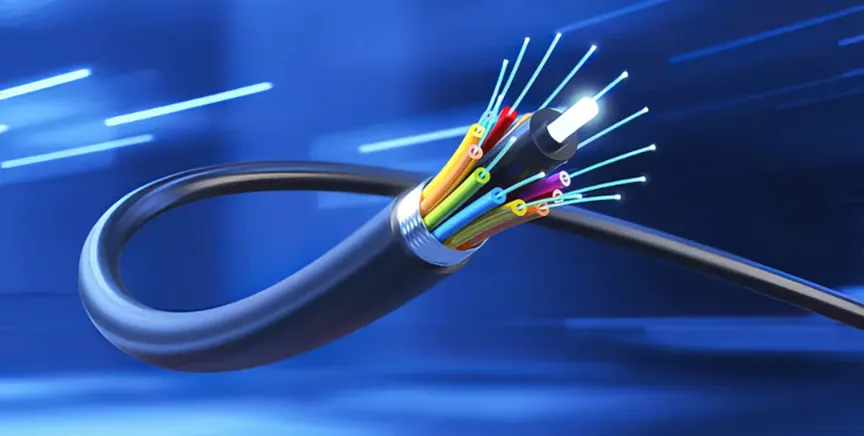
Serat optik banyak digunakan untuk komunikasi dan transmisi data. Jumlah inti dalam
fiber optic cable significantly influences its performance and determines its suitable applications. This article will explore the differences among single-core, dual-core, and multi-core fiber optic cables, along with their respective uses.
Inti tunggal
fiber optic cable utilize a single strand of glass fiber and are predominantly used for long-distance communication. Their simple structure allows for straightforward installation and management, while also making them one of the most cost-effective options to manufacture. Thanks to their high bandwidth and low signal attenuation, they are ideally suited for telecommunications networks, ISP backbones, and point-to-point data center connections.
Dengan mengkonsolidasikan 3 hingga 12 inti menjadi satu kabel, serat multi-inti memberikan dorongan substansial dalam kecepatan dan kapasitas transmisi data. Desain ini mendukung aliran data multi-saluran simultan, meningkatkan efisiensi jaringan dan memungkinkan perluasan masa depan yang mudah. Mereka sebagian besar digunakan di lingkungan dengan permintaan tinggi seperti pusat data, platform komputasi awan, komputasi kinerja tinggi (HPC), dan infrastruktur telekomunikasi modern.
Memilih yang sesuai
fiber optic cable—be it single-core, dual-core, or multi-core—is a decision dictated by specific application requirements. To summarize, single-core excels in cost-effective long-distance links, dual-core provides valuable redundancy and bidirectional flexibility, while multi-core delivers maximum capacity for data-intensive environments. A clear understanding of these distinctions is key to making a strategic investment that ensures both optimal performance and future scalability, whether you are upgrading an existing network or deploying a new one.


