

 Español
 Português
 لالعربية
 Русский
 Bahasa Indonesia
 Français
 Türkçe
 Bahasa Melayu
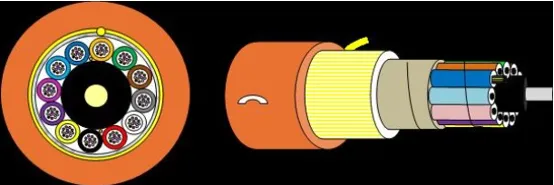
The choice of armor for fiber optic cables—whether non-metallic materials such as glass fiber reinforced plastic (GRP), glass-covered aluminum (GCO), or glass yarns, or metallic materials like steel tape and wires— hinges on critical factors including the application environment, installation methods, and required protection features.
1. Environmental Suitability
Non-Metallic Armor: Suited for both indoor and outdoor environments, prized for its flexibility and adaptability to complex wiring scenarios.
Metallic Armor: Primarily deployed outdoors where superior mechanical protection is critical, such as in harsh or high-risk environments.
2. UV Resistance
Both non-metallic and metallic armored cables are available in UV-stabilized versions, ensuring durability under prolonged outdoor sunlight exposure.
3. Mechanical Protection
Equivalent Protection: Both armor types can provide comparable levels of durability, crush resistance, and impact resistance.
Key Difference (Dielectric Property): Non-metallic cables are dielectric, eliminating installation restrictions near power lines, unlike metallic armor which may pose conductive risks.
4. Installation and Handling
Non-Metallic Armor: Typically uses thick glass yarns, resulting in lighter and more flexible cables. This design facilitates long-distance duct installation via blowing or pulling methods, especially in confined spaces.
Metallic Armor: Employs steel tape or wires, which add significant hardness and reduce flexibility, making long-distance installation more challenging.
5. Rodent Protection
Both armor types offer effective rodent protection through distinct mechanisms:
Steel Tape: Acts as a physical barrier against biting.
Glass Yarns: Deter rodents by irritating their mouths when chewed, preventing further damage.
6. Preference in Fiber Optic Installations
Non-metallic armored cables are often the preferred choice due to:
Ease of installation and handling.
High flexibility, simplifying deployment in diverse environments.
Adequate mechanical and rodent protection.
Lighter weight and dielectric properties, reducing installation constraints and risks.
7. Mechanism of Rodent Deterrence
When attacked by rodents, non-metallic armor embedded with glass fibers stimulates the animals' oral cavities, causing discomfort and effectively deterring further chewing.
8. Suitability of Metallic Armor
Metallic armor is ideal for applications requiring additional robust protection, particularly in outdoor environments with severe mechanical hazards.
This comprehensive analysis highlights the advantages of non-metallic armor in most fiber optic installations, while acknowledging the niche role of metallic armor in specialized high-risk scenarios.


