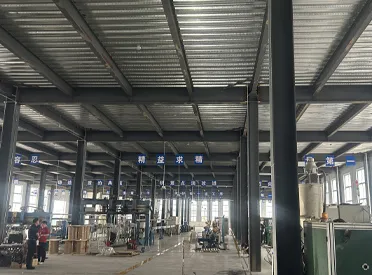
Product Description
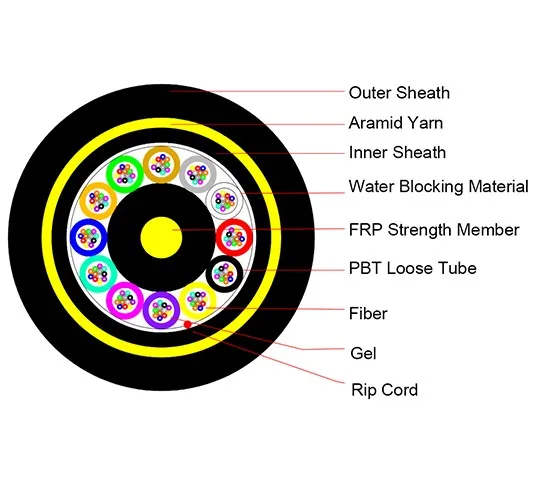
ADSS double-Jacket all-dielectric self-supporting optical cable Description
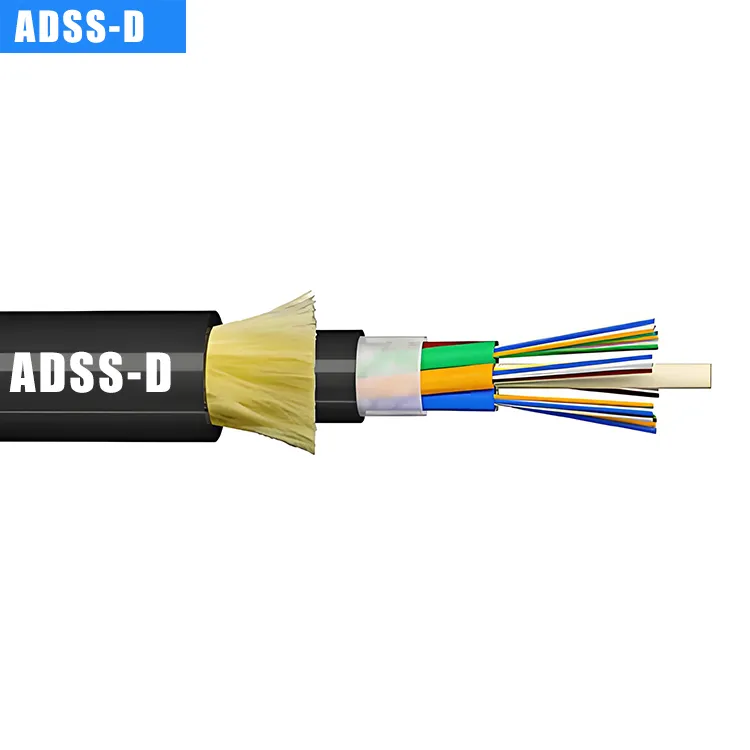
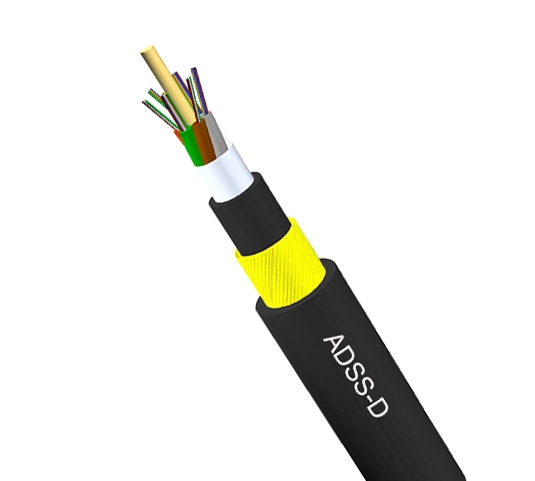
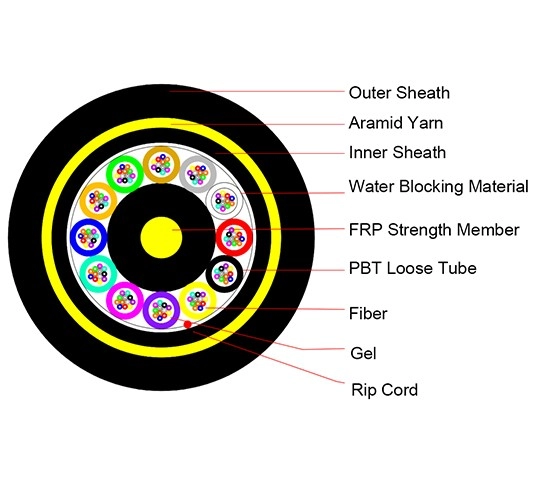
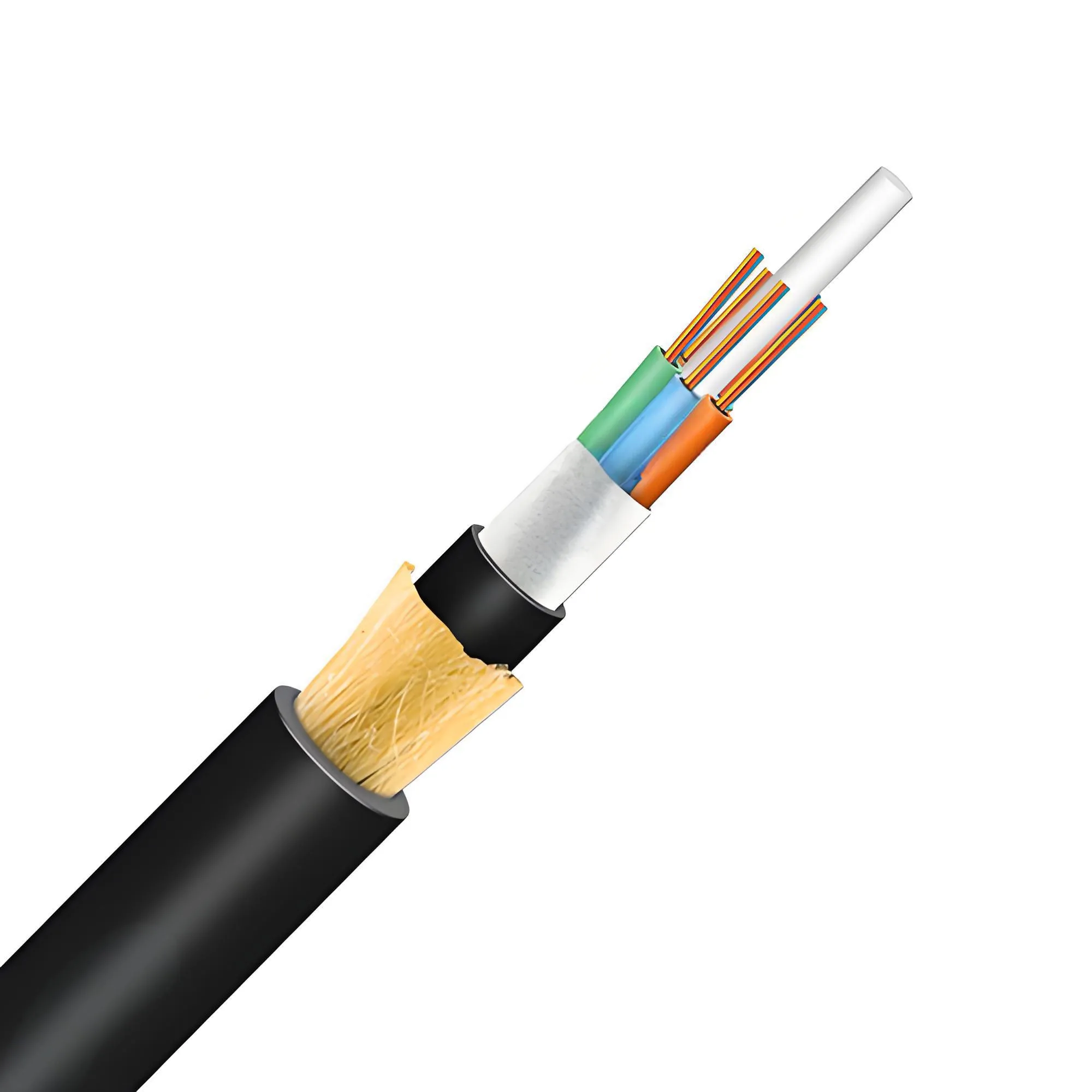
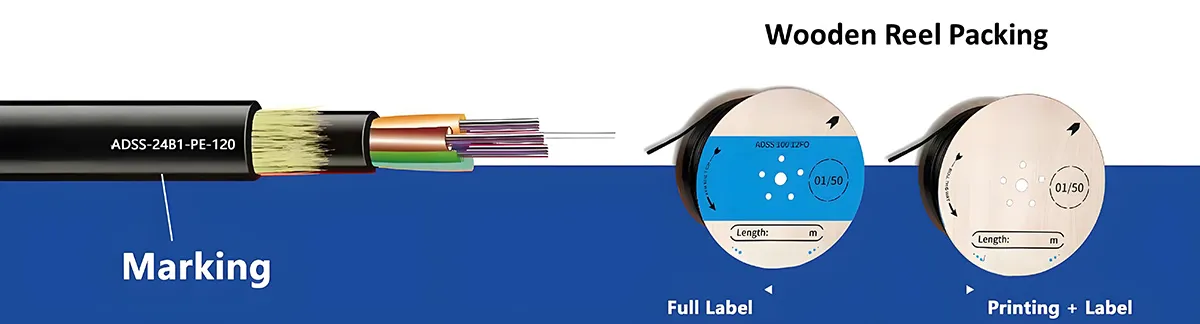
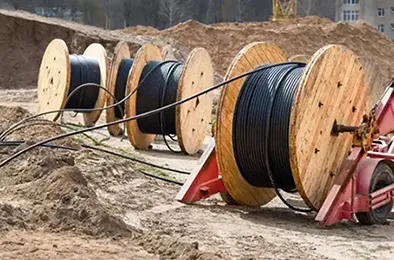
ADSS cable is loose tube stranded fibers 250um, are positioned into a loose tube made of high modulus plastic. The tubes are filled with a water-resistant filling compound. The tubes and fillers are stranded around a FRP as non-metallic strength member into a compact and circular cable core,After the cable core is filled with filling compound , it is covered with PE inner sheath. After stranded layer of aramid yarns are applied over the inner sheathas strength member, the cable is completed with PE or AT (anti-tacking) outer sheath.
ADSS double-Jacket all-dielectric self-supporting optical cable Features
1. Structural Characteristics
All-dielectric materials: Utilizes non-metallic reinforcement (such as aramid yarn) and a polyethylene sheath to ensure high insulation and prevent electrocorrosion of metallic materials in strong electric fields.
Layered Design: Typical construction includes a loose tube stranded-filled core, a polyethylene inner sheath, aramid yarn armor, and a tracking-resistant outer sheath. Some models utilize an AT sheath (above 110 kV) or a PE sheath (below 110 kV).
2. Mechanical Properties
High Tensile Strength: Utilizes aramid rope as reinforcement. Maximum Allowable Tensile Strength (MAT) and Ultimate Tensile Strength (UTS) must be designed based on span length and environmental dynamics. Typical spans can reach 1,800 meters.
Environmental Adaptability: Resistant to low temperatures and wind vibration, elongation can reach 0.6% under icing conditions. Sag and tension calculations require specialized software.
3. Electrical Performance
Anti-corrosion and Lightning Protection: The AT sheath material can withstand voltages up to 500kV. The surface potential must be controlled through suspension point design to prevent galvanic corrosion.
No Electromagnetic Interference: The fully insulated structure is suitable for co-pairing high-voltage transmission lines, eliminating the need for power outages.
4. Construction and Maintenance Advantages
Independent Installation: No need to attach to power lines, allowing direct use of tower resources for high construction efficiency.
Maintenance-Free: UV and ballistic resistance (no troubleshooting with a sand gun at a distance of 10 meters), long lifespan.
5. Typical Application Scenarios
High-voltage power grid communications: PE sheaths are commonly used for lines below 110kV, while AT sheaths are recommended for lines above 110kV.
Complex Terrain: Reduces tower load and ice impact in mountainous areas and river crossings.
Application:
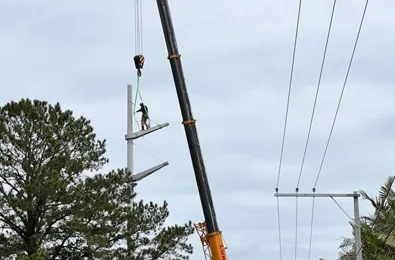
Aerial for power cable transmission line.
* data is too long, please view it in horizontal mode.


 Español
 Português
 لالعربية
 Русский
 Bahasa Indonesia
 Français
 Türkçe
 Bahasa Melayu