Product Technical Parameters
Standard:
| Standard | Description |
|---|
| ITU-TG.652 | Characteristics of a single mode optical fiber. |
| ITU-TG.655 | Characteristics of a non-zero dispersion -shifted single mode fibers optical. |
| EIA/TIA598 B | Col code of fiber optic cables. |
| IEC 60794-4-10 | Aerial optical cables along electrical power lines-family specification for OPGW. |
| IEC 60794-1-2 | Optical fiber cables -part test procedures. |
| IEEE1138-2009 | IEEE Standard for testing and performance for optical ground wire for use on electric utility power lines. |
| IEC 61232 | Aluminum -Clad steel wire for electrical purposes. |
| IEC60104 | Aluminum magnesium silicon alloy wire for overhead line conductors. |
| IEC 61089 | Round wire concentric lay overhead electrical stranded conductors. |
Colors -12 Chromatography:
| No. | 1 | 2 | 3 | 4 | 5 | 6 |
|---|
| Color | Blue | Orange | Green | Brown | Gray | White |
|---|
| No. | 7 | 8 | 9 | 10 | 11 | 12 |
|---|
| Color | Red | Black | Yellow | Violet | Pink | Aqua |
|---|
Technical Parameter:
Typical Design for Single Layer:
| Specification | Fiber Count | Diameter (mm) | Weight (kg/km) | RTS (KN) | Short Circuit (KA2s) |
|---|
| OPGW-32 (40.6;4.7) | 12 | 7.8 | 243 | 40.6 | 4.7 |
| OPGW-42 (54.0;8.4) | 24 | 9 | 313 | 54 | 8.4 |
| OPGW-42 (43.5;10.6) | 24 | 9 | 284 | 43.5 | 10.6 |
| OPGW-54 (55.9;17.5) | 36 | 10.2 | 394 | 67.8 | 13.9 |
| OPGW-61 (73.7;17.5) | 48 | 10.8 | 438 | 73.7 | 17.5 |
| OPGW-61 (55.1;24.5) | 48 | 10.8 | 358 | 55.1 | 24.5 |
| OPGW-68 (80.8;21.7) | 54 | 11.4 | 485 | 80.8 | 21.7 |
| OPGW-75 (54.5;41.7) | 60 | 12 | 459 | 63 | 36.3 |
| OPGW-76 (54.5;41.7) | 60 | 12 | 385 | 54.5 | 41.7 |
Typical Design for Double Layer:
| Specification | Fiber Count | Diameter (mm) | Weight (kg/km) | RTS (KN) | Short Circuit (KA2s) |
|---|
| OPGW-96 (121.7;42.2) | 12 | 13 | 671 | 121.7 | 42.2 |
| OPGW-127 (141.0;87.9) | 24 | 15 | 825 | 141 | 87.9 |
| OPGW-127 (77.8;128.0) | 24 | 15 | 547 | 77.8 | 128 |
| OPGW-145 (121.0;132.2) | 28 | 16 | 857 | 121 | 132.2 |
| OPGW-163 (138.2;183.6) | 36 | 17 | 910 | 138.2 | 186.3 |
| OPGW-163 (99.9;213.7) | 36 | 17 | 694 | 99.9 | 213.7 |
| OPGW-183 (109.7;268.7) | 48 | 18 | 775 | 109.7 | 268.7 |
| OPGW-183 (118.4;261.6) | 48 | 18 | 895 | 118.4 | 261.6 |
Product Description
Applications:
Main Features:
-
Small cable diameter, light weight, low additional load to the tower;
-
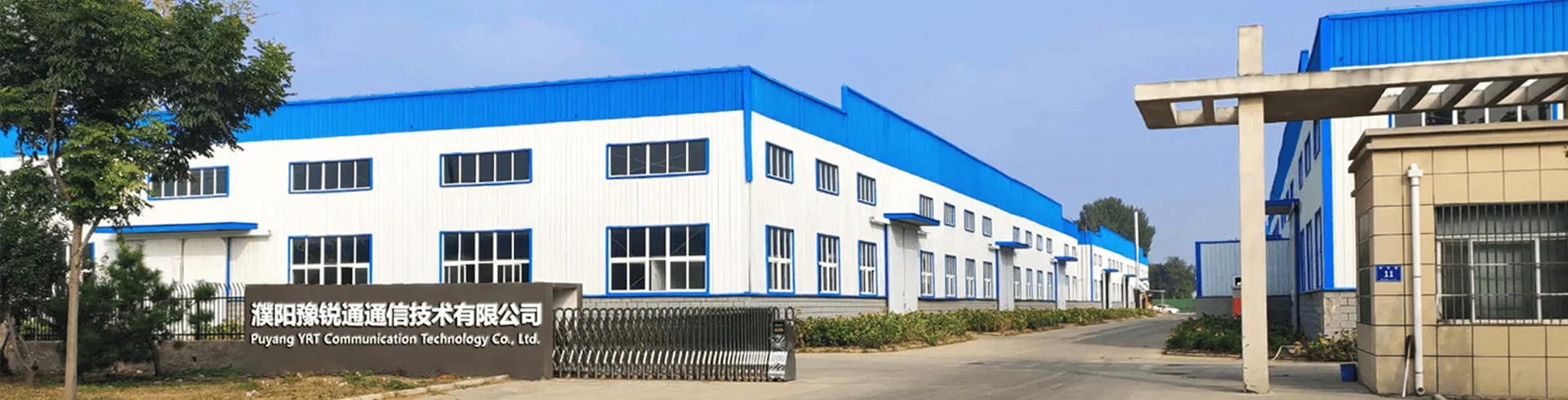
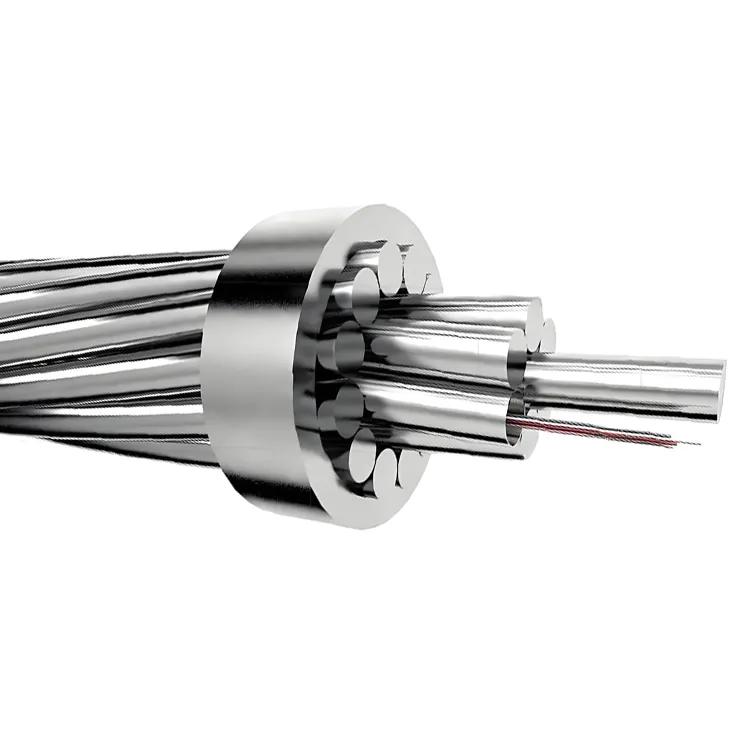
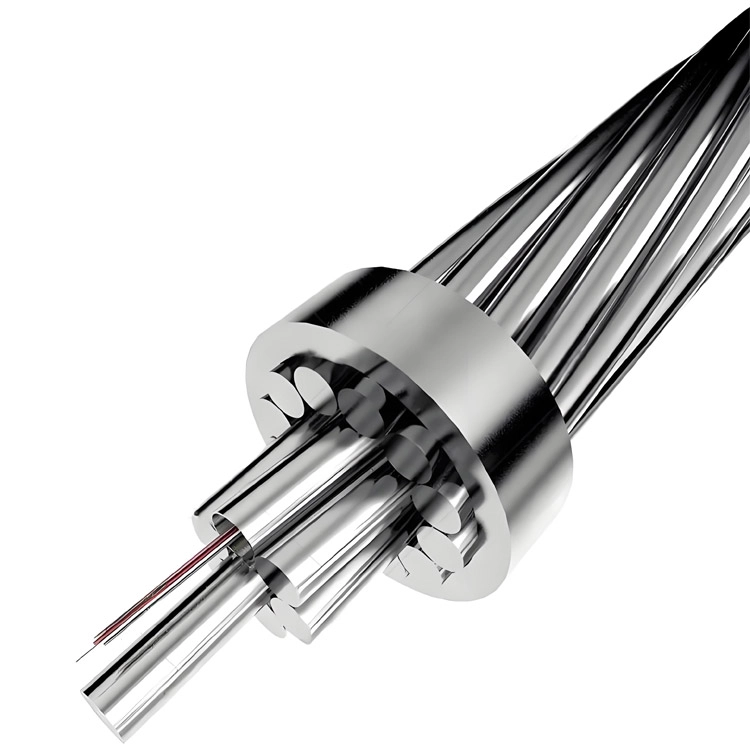
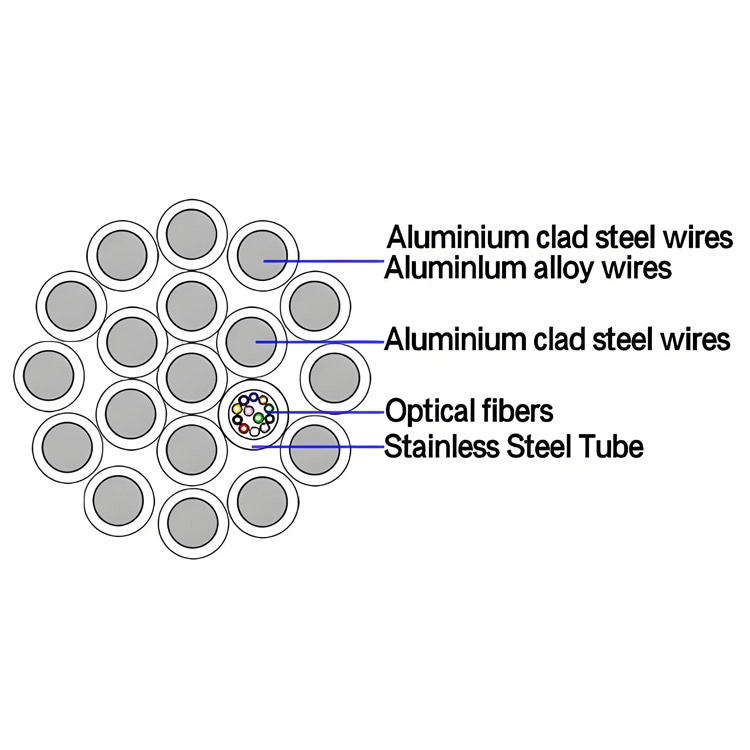
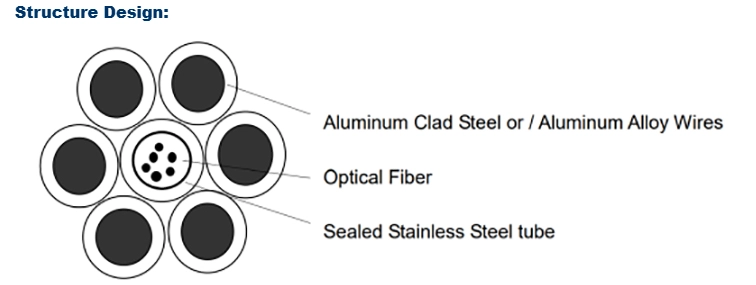
The steel tube locates at the center of the cable, no second mechanical fatigue damage.
-
Low resistance to side pressure, torsion and tensile (single layer).
Remarks:
Detail requirements need to be sent to us for cable design and price calculation. Below requirements are a must:
-
A, Power transmission line voltage level
-
B, fiber count
-
C, Cable structure drawing & diameter
-
D, Tensile strength
-
F, Short circuit capacity
Type test
Type test may be waived by submitting maker’s certificate of the similar product performed in an internationally acknowledged independent test organization or laboratory. If type test should be performed, it will be carried out according to an extra type test procedure reached to an agreement between purchaser and manufacturer.
Routine test
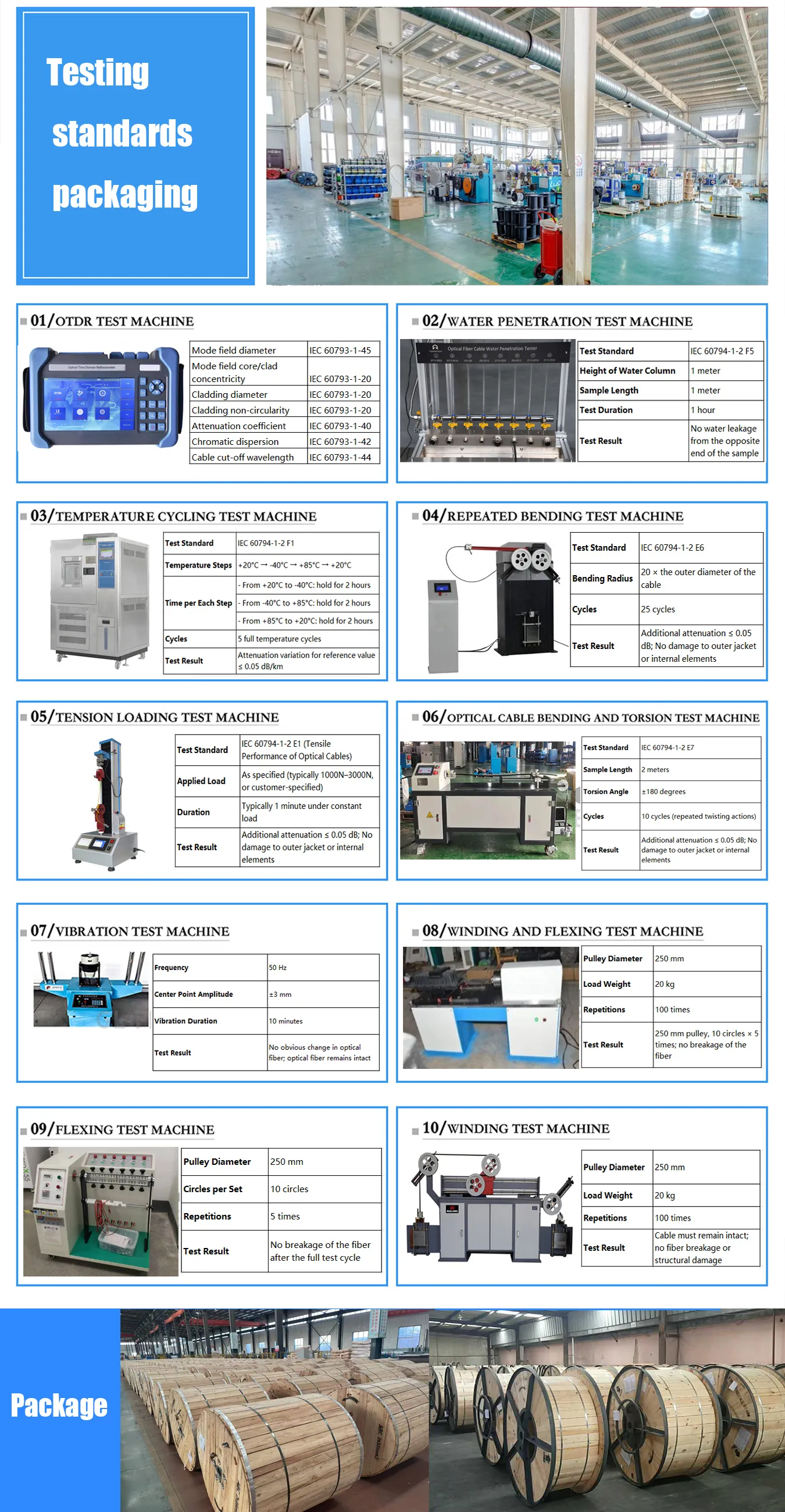
The optical attenuation coefficient on all production cable lengths is measured according to IEC 60793-1-C1C (Back-scattering technique, OTDR). Standard single-mode fibers are measured at 1310nm and at 1550nm. Non-zero dispersion shifted single–mode (NZDS) fibers are measured at 1550nm.
Factory test
Factory acceptance test is carried out on two samples per order in the presence of the customer or his representative. The requirements for quality characteristics are determined by relevant standards and agreed quality plans.
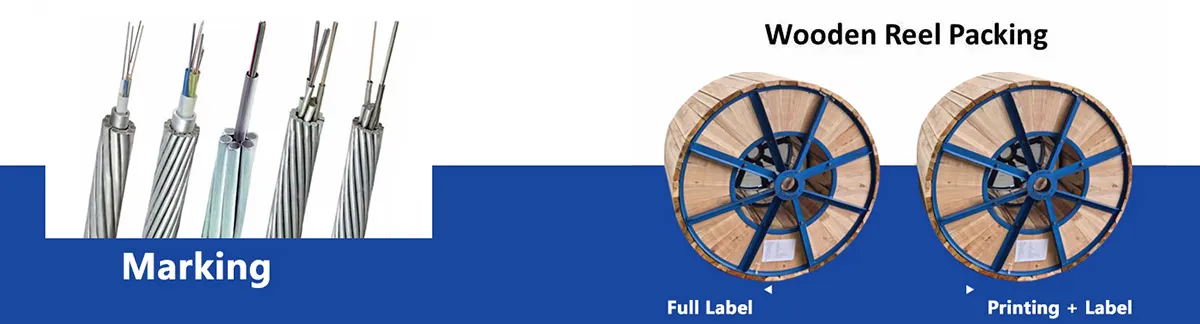
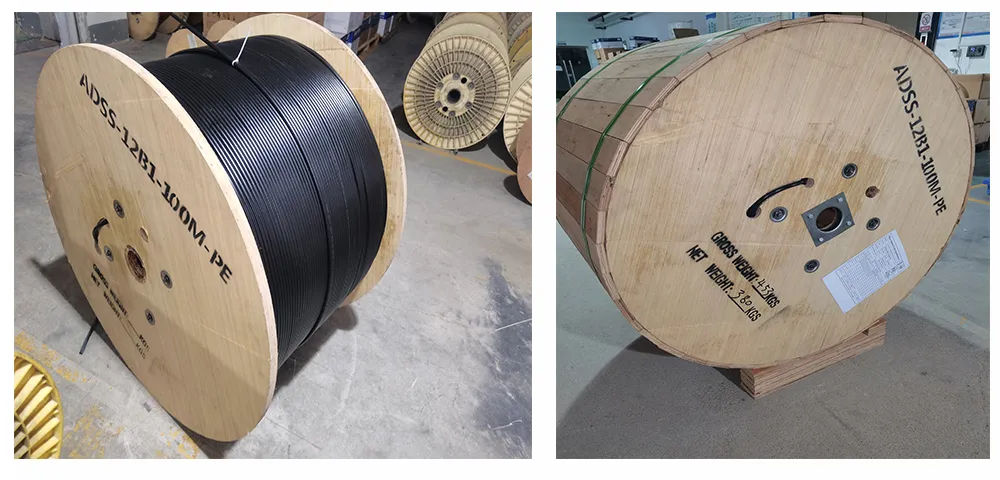
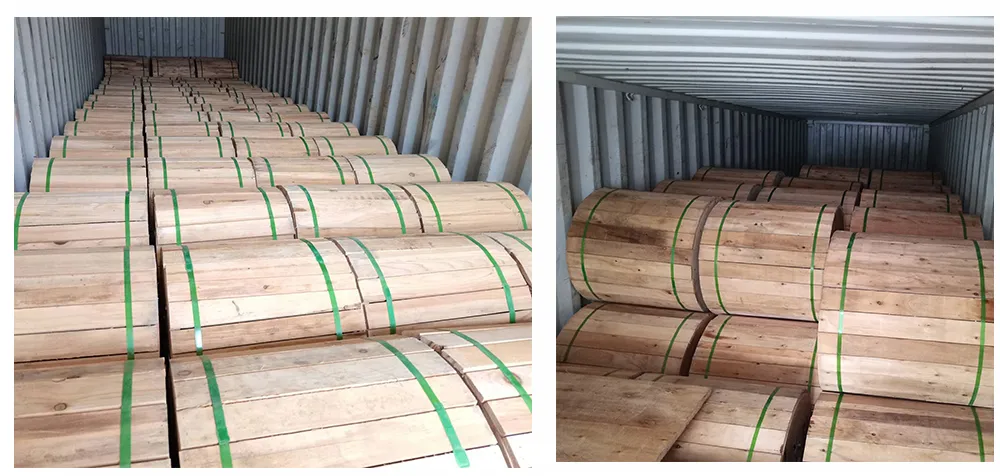
Packaging Requirements:
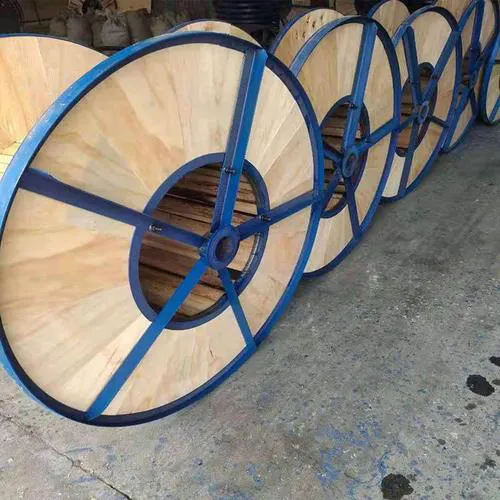
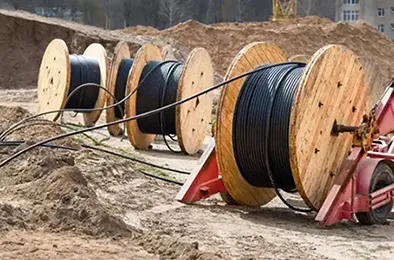
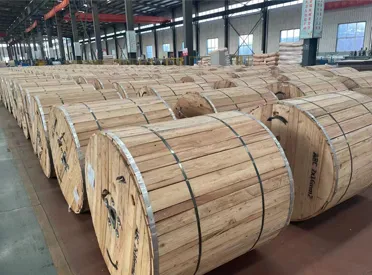
- 1:All cables shall be wound on treated wooden spools that are not returnable
- 2:Cable ends must be firmly secured to the spool and protected with waterproof shrink caps
- 3:Each spool must include: Protective plastic wrapping layer ,Reinforcing wooden slats for stability,Minimum 1m of free cable end for testing purposes, Standard spool length: 3000mm (±2% tolerance allowed)
Cable Identification:
The outer jacket must display:
- 1、Unique sequential numbering every 1m (±1% variance permitted)
- 2、 Additional repeating markings at 1m intervals showing: Product code and fiber count, Manufacturer identification, Production date (month/year),Total cable length
Standard Packaging Dimensions:
| Length | Container | Size (L×W×H) | Net Mass | Total Mass |
|---|
| 2 km | Wood spool | 90×75×90 cm | 156 kg | 220 kg |
| 3 km | Wood spool | 100×68×100 cm | 240 kg | 280 kg |
| 4 km | Wood spool | 109×75×109 cm | 300 kg | 368 kg |
| 5 km | Wood spool | 129×72×129 cm | 400 kg | 480 kg |
Technical Reference:
- 1、 Standard cable diameter: 10.0mm
- 2、Maximum span distance: 100m
- 3、Contact sales team for complete technical specifications
Spool Marking Standards:
Permanent markings (minimum 25-30mm height) must appear on both sides of each spool:
- 1、 Company name and trademark
- 2、Contained cable length
- 3、Cable specifications (type/fiber count)
- 4、Winding orientation
- 5、Weight measurements (gross/net)
Note: All wooden packaging materials must undergo proper fumigation treatment prior to use.
Case
Angola Power-Line Corridor Communications Project Case Study|OPGW Supply as the Backbone + Outdoor Fiber Optic Cable Portfolio Support
+
Turkey:YRTFiber's Metropolitan Fiber Network Modernization in Turkey
+
Indonesia: YRTFiber's Metropolitan Area Network Upgrade in Indonesia
+
Zambia : High-Performance Outdoor Fiber Optic Cable Supply by yrtfiber
+
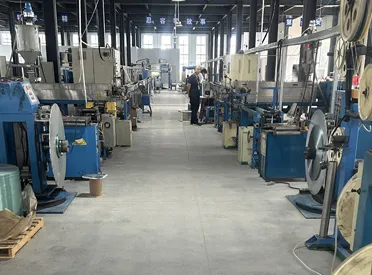
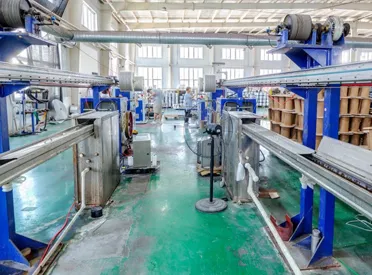
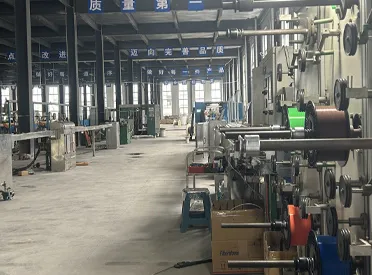
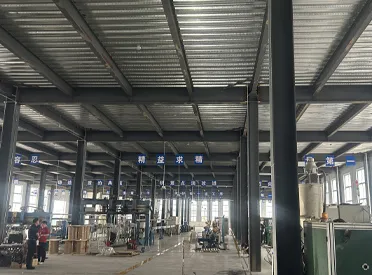
Opticlink have a total of 8pieces production lines, include FTTH drop cable, Central loose cable and stranded fiber cable production , modernized dust-free workshops, and high-performance processing equipment. From raw material procurement, to finished product processing, to product quality testing, to packaging and export, we have a full range of production lines. The following are some of the actual photos of the workshop
1. What is the OPGW-2 central stainless steel tube fiber cable used for?
OPGW-2 is designed for installation in high-voltage power transmission networks. It provides dual functionality: grounding protection and high-capacity fiber optic communication, making it ideal for utility and telecom applications.
2. What is the structure of this cable?
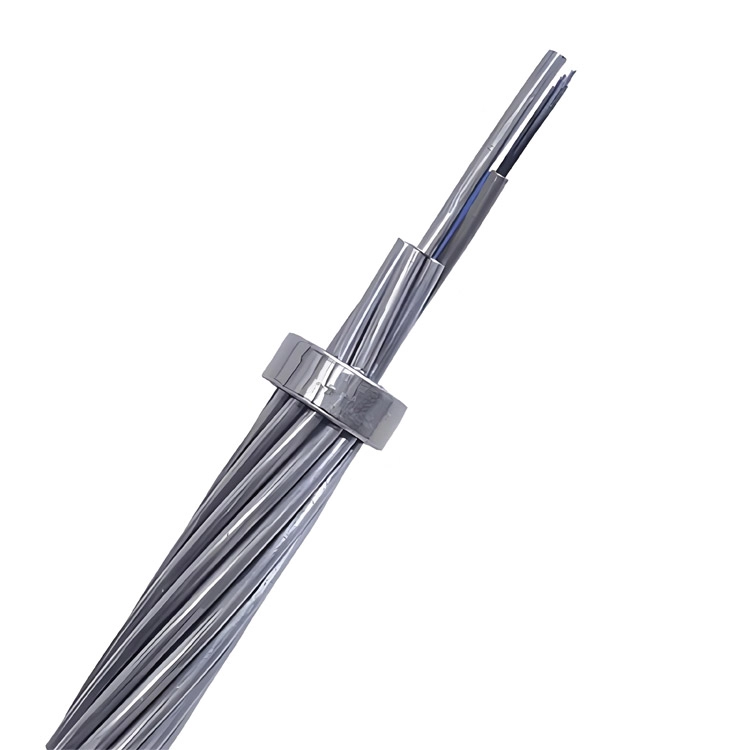
This cable uses a central stainless steel loose tube to house and protect the optical fibers. Surrounding layers typically include aluminum or aluminum-clad steel wires for mechanical strength and conductivity.
3. What fiber types and core counts are supported?
The OPGW-2 cable supports 12 to 144 fiber cores using G.652D or G.655C single-mode fibers, ensuring compatibility with modern communication systems and long-haul transmission.
4. What are the mechanical and environmental benefits of this design?
The stainless steel tube offers excellent crush resistance, corrosion protection, and thermal stability, while the outer layer provides electrical conductivity and grounding during lightning strikes.
5. What makes this cable suitable for aerial installation on power lines?
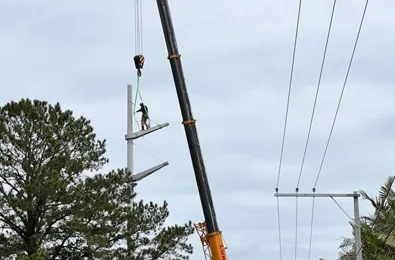
Its robust construction and dielectric protection allow for direct installation on overhead transmission towers, with no separate grounding wire needed. It resists EMI, lightning, and harsh weather conditions.


 Español
 Português
 لالعربية
 Русский
 Bahasa Indonesia
 Français
 Türkçe
 Bahasa Melayu