Product Technical Parameters
optical properties
| G.652 | G.655 | 50/125μm | 62.5/125μm |
|---|
| Attenuation (+20℃) |
|
| ≤3.0 dB/km @850nm | ≤3.0 dB/km @850nm |
|
| ≤1.0 dB/km @1300nm | ≤1.0 dB/km @1300nm |
| ≤0.36 dB/km @1310nm | ≤0.40 dB/km @1310nm |
|
|
| ≤0.22 dB/km @1550nm | ≤0.23 dB/km @1550nm |
|
|
| Bandwidth (Class A) |
|
| ≥500 MHz·km @850nm | ≥200 MHz·km @850nm |
|
| ≥1000 MHz·km @1300nm | ≥600 MHz·km @1300nm |
| Numerical Aperture |
|
| 0.200±0.015NA | 0.275±0.015NA |
| Cable Cut-off Wavelength | ≤1260nm | ≤1480nm |
|
|
| Storage/Operating temperature | -40℃ ~ +70℃ |
Technical parameters
| Out Diameter (mm) | Fiber cores | Daily max working tension (KN) | Max working tension (KN) | Break Strength (KN) | Strength Member CSA (mm²) | Modulus of Elasticity (N·k/mm²) | Heat Expansion Coefficient (×10⁻⁸/K) | Suitable Span (m) |
|---|
| PE sheath | AT sheath | A | B | C | D |
|---|
| 12.5 | 125 | 136 | 1.5 | 4 | 10 | 4.6 | 7.6 | 1.8 | 160 | 100 | 140 | 100 |
| 13.0 | 132 | 142 | 2.25 | 6 | 15 | 7.6 | 8.3 | 1.5 | 230 | 150 | 200 | 150 |
| 13.3 | 137 | 148 | 3 | 8 | 20 | 10.35 | 9.45 | 1.3 | 300 | 200 | 290 | 200 |
| 13.6 | 145 | 156 | 3.6 | 10 | 24 | 13.8 | 10.8 | 1.2 | 370 | 250 | 350 | 250 |
| 13.8 | 147 | 159 | 4.5 | 12 | 30 | 14.3 | 11.8 | 1.0 | 420 | 290 | 400 | 280 |
| 14.5 | 164 | 177 | 5.4 | 15 | 36 | 18.4 | 13.6 | 0.9 | 480 | 320 | 460 | 320 |
| 15.1 | 179 | 193 | 7.95 | 22 | 53 | 26.4 | 18 | 0.3 | 670 | 460 | 650 | 460 |
| 15.6 | 194 | 208 | 10.5 | 28 | 70 | 33 | 19.6 | 0.1 | 800 | 560 | 800 | 560 |
Product Description
Internal structure
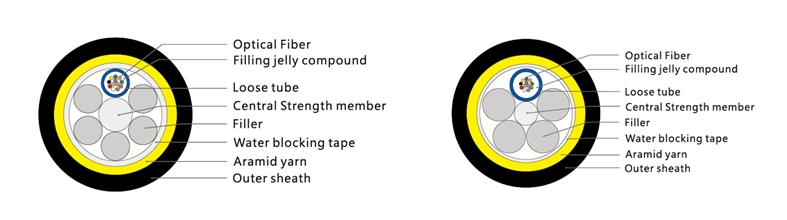
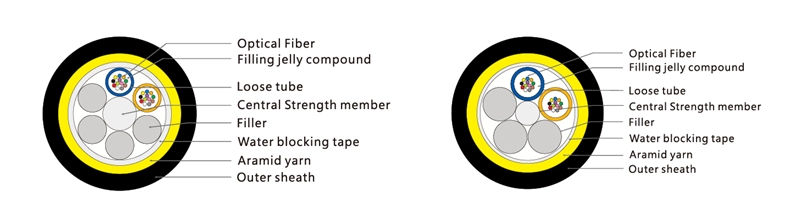
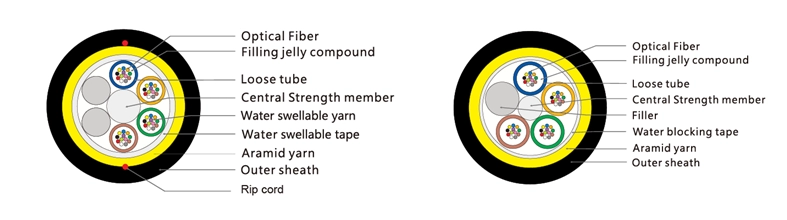
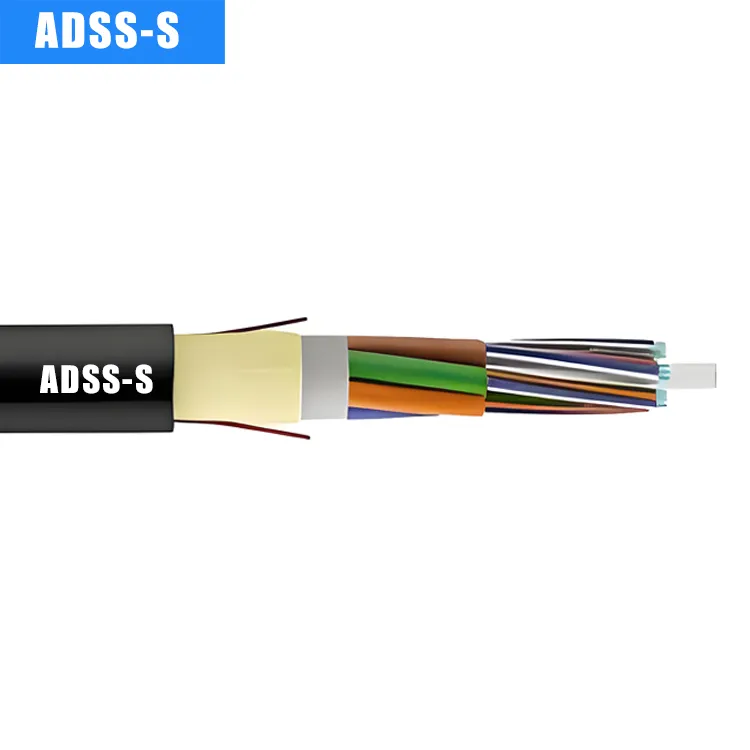
ADSS Single Jacket All Dielectric Self-supporting Aerial Cable description
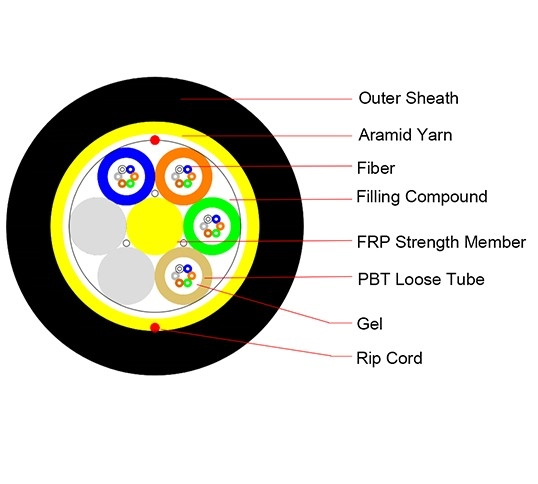
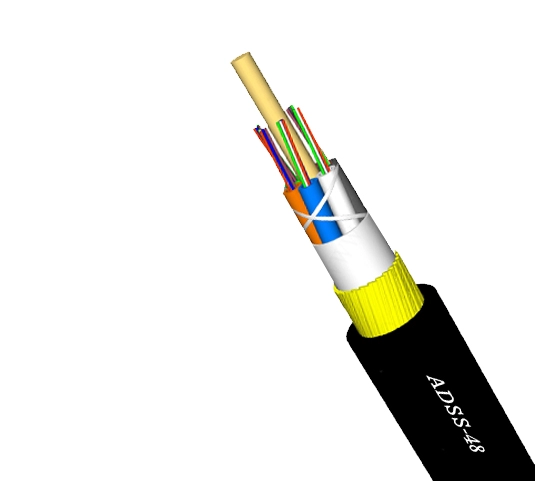
ADSS fiber optic cable is a loose tube stranded fiber optic cable. The 250-um fiber is placed in a loose tube made of high modulus plastic, and the tube is filled with waterproof filler. The loose tube and filler are stranded around the non-metallic reinforcing member FRP to form a compact circular cable core. After the cable core is filled with filler, it is wrapped with a PE inner sheath, and a layer of aramid yarn is stranded on the outer layer of the reinforcing member. Finally, it is wrapped with a PE or AT (anti-stick) outer sheath.
Product features of ADSS Single Jacket All Dielectric Self-supporting Aerial Cable
Power-free installation
Lightweight and small diameter can reduce the load on cable towers and struts due to freezing and wind.
Large span, the maximum span can reach more than 1000m
Good tensile and temperature resistance
Long lifespan, up to 30 years or more
Purpose:
Overhead power cable transmission lines.
*data is too long, please view it in horizontal mode.
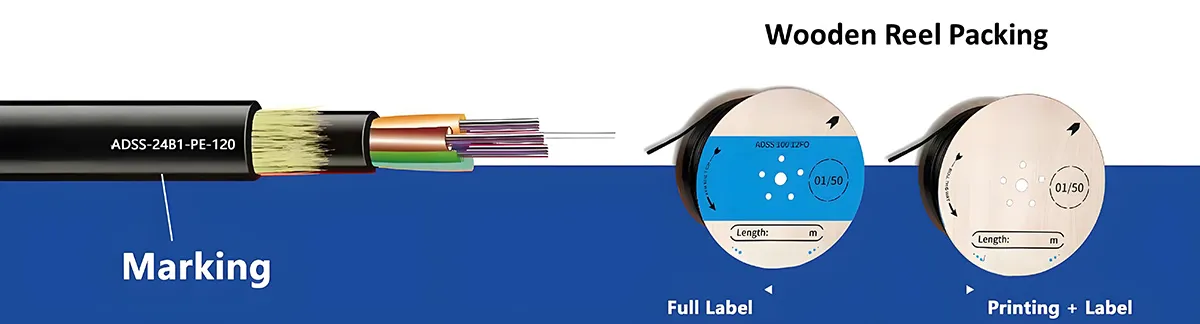
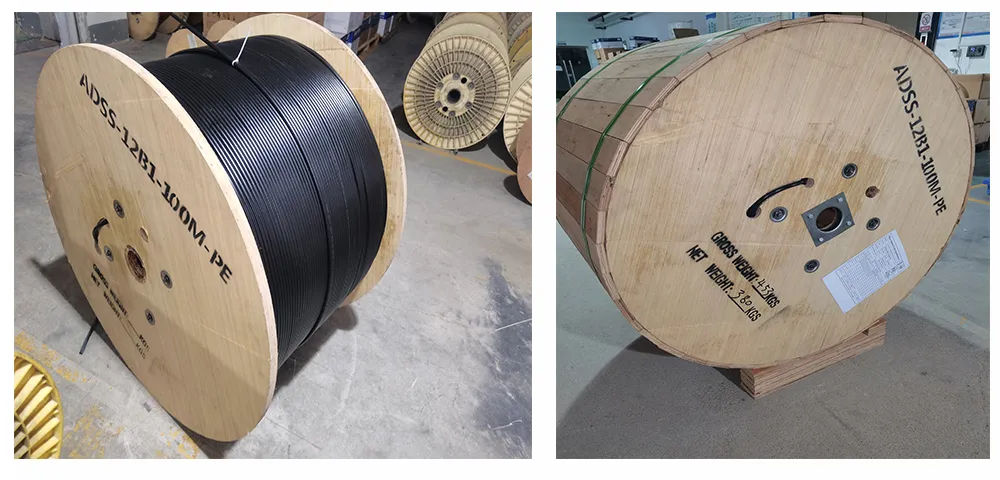
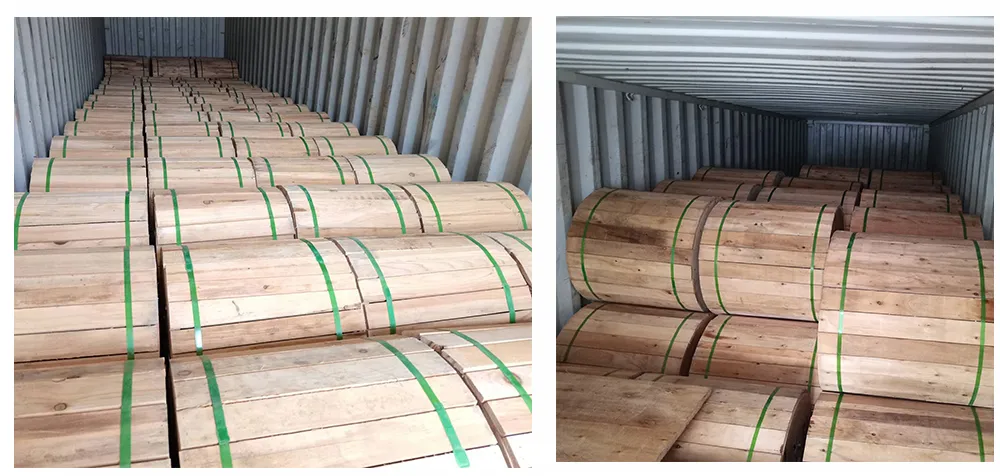
Packaging Requirements:
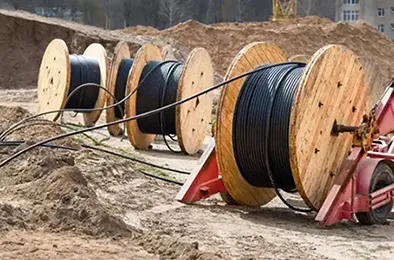
- 1:All cables shall be wound on treated wooden spools that are not returnable
- 2:Cable ends must be firmly secured to the spool and protected with waterproof shrink caps
- 3:Each spool must include:
- Protective plastic wrapping layer
- Reinforcing wooden slats for stability
- Minimum 1m of free cable end for testing purposes
- Standard spool length: 3000mm (±2% tolerance allowed)
Cable Identification:
The outer jacket must display:
- 1、Unique sequential numbering every 1m (±1% variance permitted)
- 2、 Additional repeating markings at 1m intervals showing:
- Product code and fiber count
- Manufacturer identification
- Production date (month/year)
- Total cable length
Standard Packaging Dimensions:
| Length | Container | Size (L×W×H) | Net Mass | Total Mass |
|---|
| 2 km | Wood spool | 90×75×90 cm | 156 kg | 220 kg |
| 3 km | Wood spool | 100×68×100 cm | 240 kg | 280 kg |
| 4 km | Wood spool | 109×75×109 cm | 300 kg | 368 kg |
| 5 km | Wood spool | 129×72×129 cm | 400 kg | 480 kg |
Technical Reference:
- 1、 Standard cable diameter: 10.0mm
- 2、Maximum span distance: 100m
- 3、Contact sales team for complete technical specifications
Spool Marking Standards:
Permanent markings (minimum 25-30mm height) must appear on both sides of each spool:
- 1、 Company name and trademark
- 2、Contained cable length
- 3、Cable specifications (type/fiber count)
- 4、Winding orientation
- 5、Weight measurements (gross/net)
Note: All wooden packaging materials must undergo proper fumigation treatment prior to use.
Case
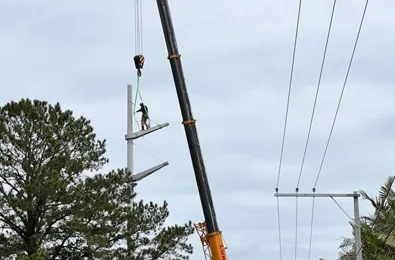
Angola Power-Line Corridor Communications Project Case Study|OPGW Supply as the Backbone + Outdoor Fiber Optic Cable Portfolio Support
+
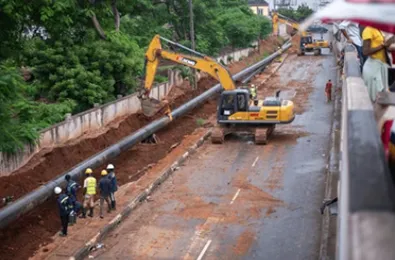
Turkey:YRTFiber's Metropolitan Fiber Network Modernization in Turkey
+
Indonesia: YRTFiber's Metropolitan Area Network Upgrade in Indonesia
+
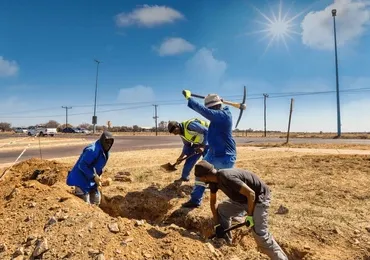
Zambia : High-Performance Outdoor Fiber Optic Cable Supply by yrtfiber
+
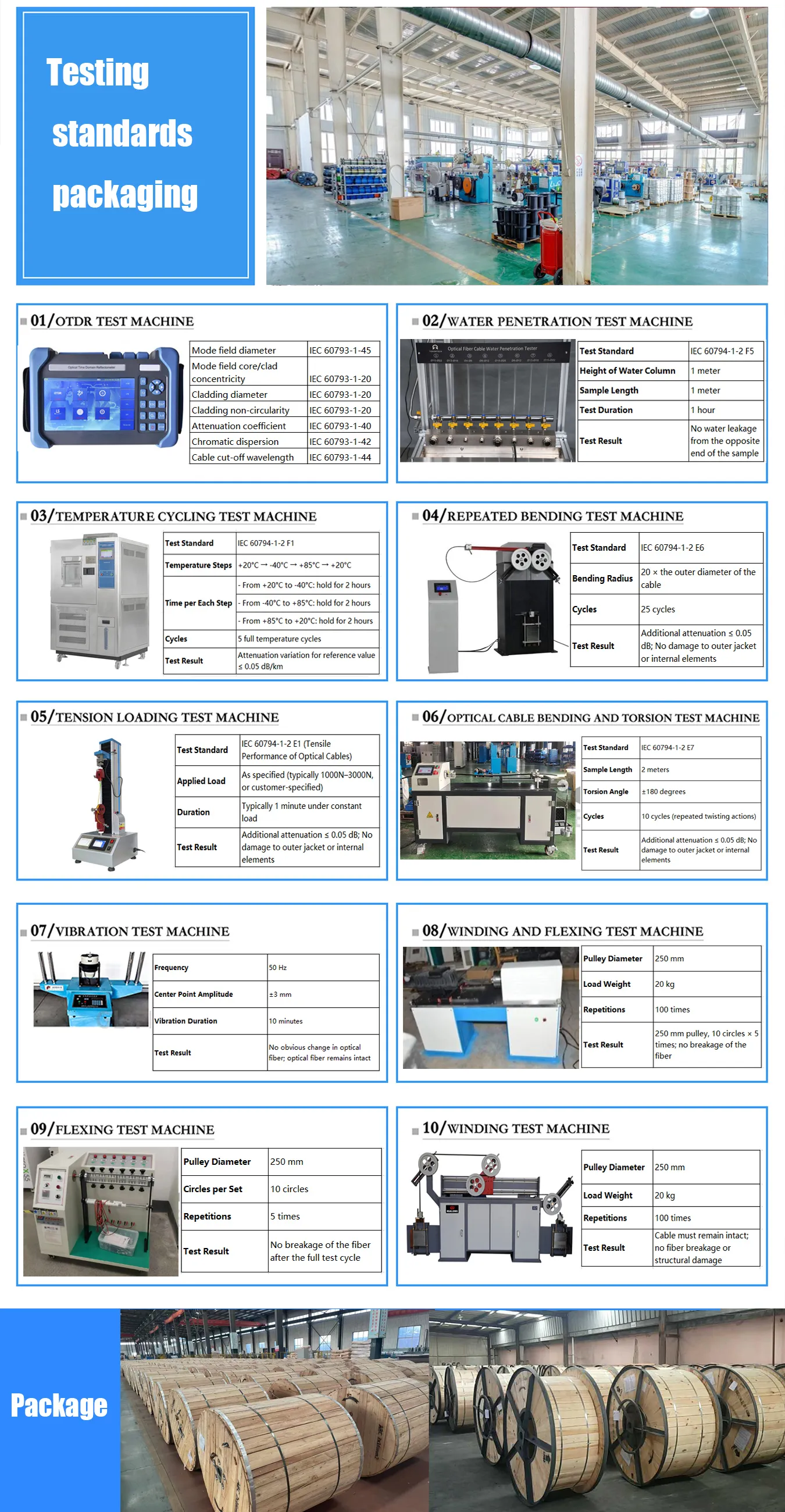
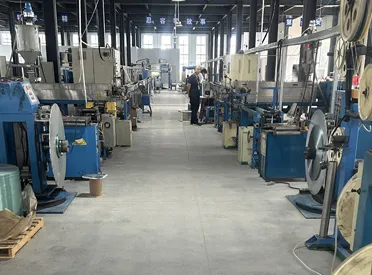
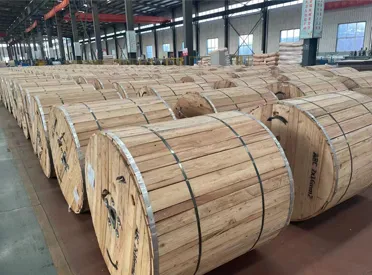
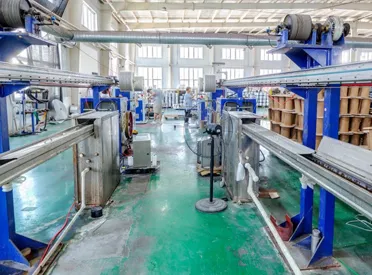
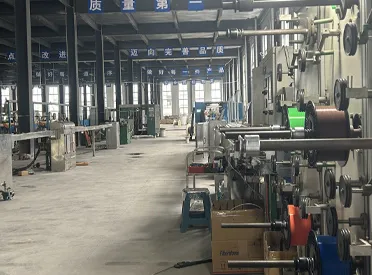
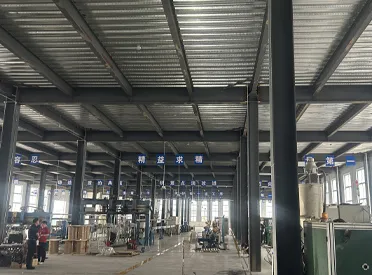
Opticlink have a total of 8pieces production lines, include FTTH drop cable, Central loose cable and stranded fiber cable production , modernized dust-free workshops, and high-performance processing equipment. From raw material procurement, to finished product processing, to product quality testing, to packaging and export, we have a full range of production lines. The following are some of the actual photos of the workshop
1. What is an ADSS single jacket fiber optic cable?
ADSS (All-Dielectric Self-Supporting) single jacket cable is a lightweight aerial fiber optic cable that requires no metallic support. It is designed for easy installation along power poles and utility routes without needing a messenger wire.
2. What fiber types and core counts are supported?
The cable supports 2 to 288 fiber cores, using standard single-mode fibers such as G.652D and G.655. This makes it suitable for a wide range of applications from access to backbone networks.
3. What is the maximum span this cable supports?
This specific model is designed for aerial spans up to 150 meters, depending on environmental conditions and installation requirements.
4. Is the cable resistant to environmental stress?
Yes. The cable’s structure includes a water-blocking gel-filled loose tube, aramid yarn strength members for tensile support, and a durable outer jacket that offers excellent resistance to UV, moisture, temperature variations, and mechanical stress.
5. What are common applications of this ADSS cable?
ADSS cables are widely used in:
FTTH (Fiber to the Home) rollouts
Power line communication networks
Rural broadband deployment
Backbone fiber optic links in utility corridors


 Español
 Português
 لالعربية
 Русский
 Bahasa Indonesia
 Français
 Türkçe
 Bahasa Melayu