Cabo de fibra ótica blindado

2025-09-24

Prefácio

A fibra óptica, um material frágil, deve passar por processamento para conferir resistência mecânica suficiente para se adaptar a diversos ambientes. Este tratamento protege a fibra de forças externas durante a instalação, operação e manutenção, garantindo assim uma operação estável da rede. No entanto, muitos cabos ópticos externos e internos carecem de proteção adequada em ambientes complexos, levando ao projeto de cabos ópticos blindados para resolver esse problema.

1. VisĂŁo geral do cabo blindado de fibra Ăłptica

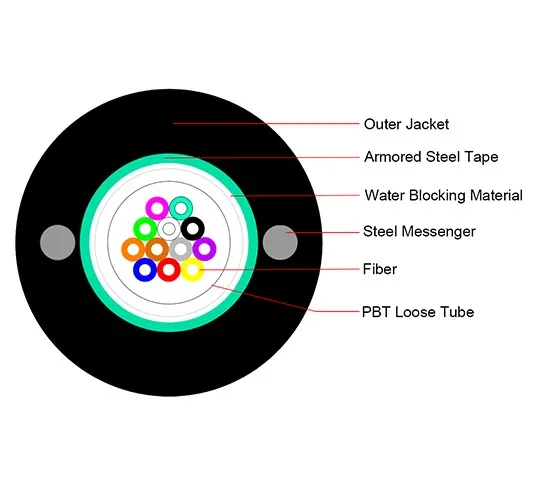
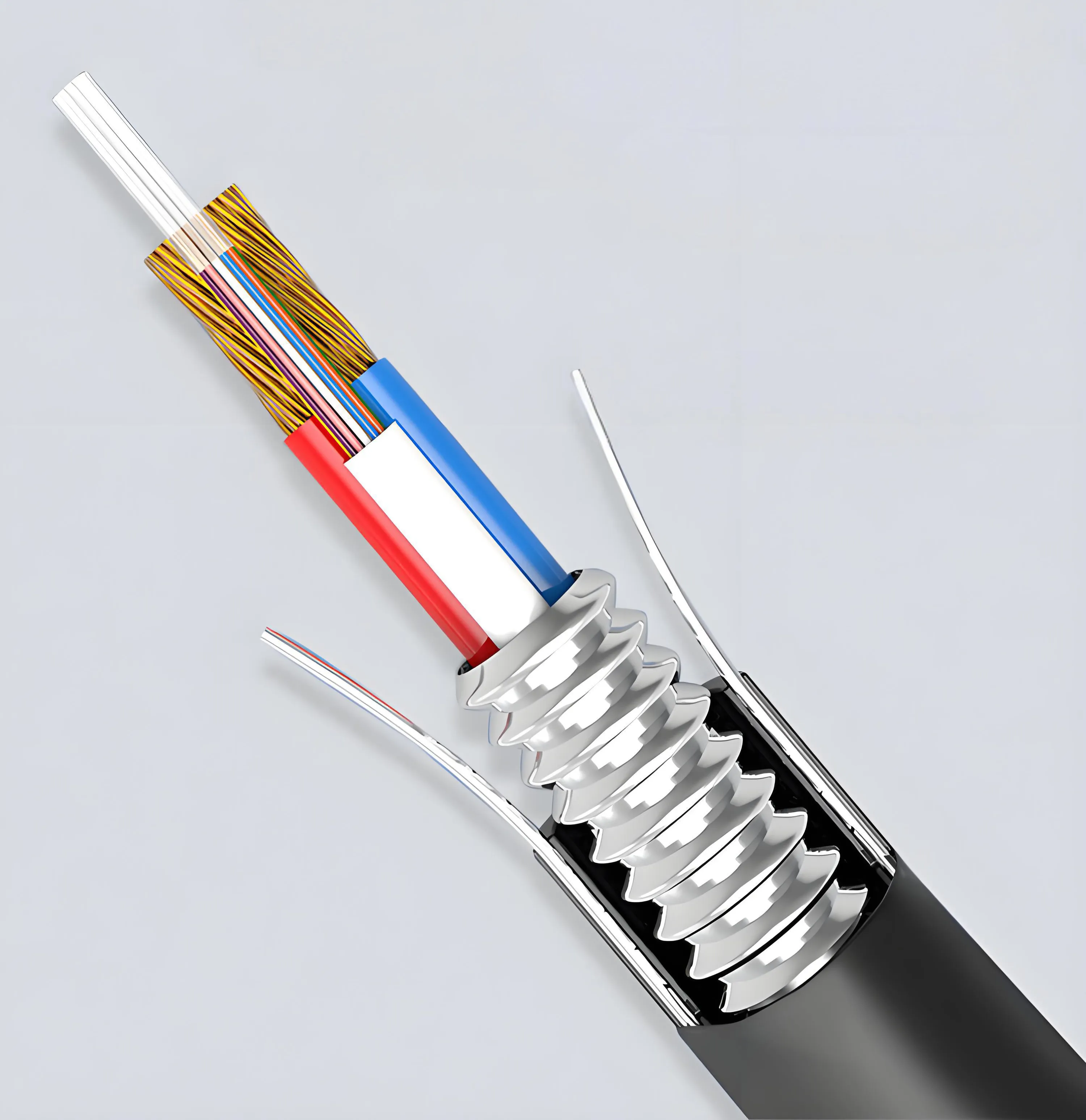
Como o nome sugere, o cabo óptico blindado refere-se a uma camada de "armadura" de metal instalada na camada externa do cabo óptico. A função dessa camada de armadura é evitar que a fibra óptica seja picada por animais, umidade ou outros danos externos.
1-2509161FZ22J.webp

3d0b850ef0b76ff61f0f1bec6237f3fa.jpeg

2. Por que escolher o cabo blindado de fibra Ăłptica?

Tradicionalmente, os cabos ópticos externos são colocados em conduítes resistentes para protegê-los de danos. No entanto, esse método de instalação é complicado, demorado, trabalhoso e caro. Para simplificar esse processo, os designers incorporaram uma camada de armadura de metal aos cabos. Este design não apenas aumenta a resistência à compressão e tração da fibra, mas também permite o uso flexível em ambientes hostis. Hoje, cabos ópticos blindados são amplamente utilizados na indústria de comunicações ópticas.

3. A estrutura do cabo blindado de fibra Ăłptica

Bainha exterior

A jaqueta externa é a primeira linha de defesa para cabos blindados de fibra óptica, protegendo-os efetivamente de solventes e abrasão física. Normalmente, a jaqueta externa é feita de um material plástico, como polietileno.

metalArmadura

A armadura de metal está localizada entre as jaquetas externa e interna para proteger contra corte, mastigação e queima. Também protege o cabo do alongamento durante a instalação. Essas armaduras geralmente são feitas de materiais metálicos fortes.

Bainha interna

A bainha interna protege o cabo de fibra óptica e é normalmente feita de materiais protetores e retardadores de chama. Simplificando, a camada tampão do cabo é tipicamente composta de fio de aramida, uma bainha de polietileno e fita de aço ondulada, garantindo sua durabilidade.

4. Tipos de cabos blindados de fibra Ăłptica

Os cabos ópticos blindados podem ser divididos em diferentes categorias de acordo com sua aplicação e tipo de blindagem.

Internal cabo óptico blindado

Os cabos ópticos blindados internos estão disponíveis em dois tipos: blindados de camada única e de camada dupla. Os cabos ópticos blindados de dupla camada são comumente usados em ambientes próximos à costa e de águas rasas, enquanto os cabos ópticos blindados de camada única são adequados para outros ambientes gerais.

Cabo óptico blindado ao ar livre

Cabos ópticos blindados ao ar livre podem ser divididos em tipos leves e pesados. Cabos ópticos blindados pesados são usados principalmente em leitos de rios e fundos marinhos, por isso são relativamente caros, enquanto cabos ópticos blindados leves são mais econômicos e práticos.

Interlocking cabo óptico blindado

Os cabos ópticos blindados interligados são feitos de material de blindagem de alumínio e são adequados para ambientes internos e externos. Eles são caracterizados por alta durabilidade e forte resistência à pressão.

Corrugated cabo óptico blindado

Os cabos blindados ondulados são feitos de fita de aço e são normalmente usados em ambientes externos. Eles têm excelentes propriedades mecânicas e são efetivamente resistentes a roedores.

5. AplicaĂ § ĂŁo de cabo blindado de fibra Ăłptica

Dependendo do ambiente de instalação, os cabos ópticos blindados podem ser divididos em dois tipos: buffer solto e buffer apertado. Os cabos ópticos blindados com buffer solto são geralmente usados em ambientes externos, enquanto os cabos ópticos blindados com buffer apertado são adequados para ambientes internos ou mistos internos e externos.

Internal cabo óptico blindado

Os cabos de fibra óptica blindados internos normalmente apresentam uma armadura de metal interligada e uma bainha externa feita de material sem halogênio e com baixo teor de fumaça. Eles são amplamente utilizados em redes de telecomunicações para conectar edifícios.
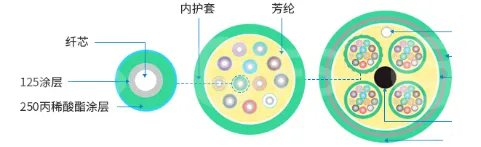
image.png

Cabo óptico blindado ao ar livre

Cabos ópticos blindados ao ar livre geralmente usam armadura corrugada, que tem alta resistência à tração, resistência à compressão e resistência a roedores, e é adequada para uso em ambientes hostis.

image.png

VI. Resumo

Nas comunicações modernas de fibra óptica, qualquer falha de fibra pode resultar em perdas financeiras significativas, tornando a proteção da integridade da fibra crucial. Cabos de fibra óptica blindados, adicionando uma camada de metal protetora à fibra, atendem efetivamente aos requisitos de proteção contra mordidas de animais, umidade e estiramento, tornando-os um componente indispensável dos sistemas de comunicação modernos.

Consulta de produto

We use cookie to improve your online experience. By continuing to browse this website, you agree to our use of cookie.

Cookies

Please read our Terms and Conditions and this Policy before accessing or using our Services. If you cannot agree with this Policy or the Terms and Conditions, please do not access or use our Services. If you are located in a jurisdiction outside the European Economic Area, by using our Services, you accept the Terms and Conditions and accept our privacy practices described in this Policy.
We may modify this Policy at any time, without prior notice, and changes may apply to any Personal Information we already hold about you, as well as any new Personal Information collected after the Policy is modified. If we make changes, we will notify you by revising the date at the top of this Policy. We will provide you with advanced notice if we make any material changes to how we collect, use or disclose your Personal Information that impact your rights under this Policy. If you are located in a jurisdiction other than the European Economic Area, the United Kingdom or Switzerland (collectively “European Countries”), your continued access or use of our Services after receiving the notice of changes, constitutes your acknowledgement that you accept the updated Policy. In addition, we may provide you with real time disclosures or additional information about the Personal Information handling practices of specific parts of our Services. Such notices may supplement this Policy or provide you with additional choices about how we process your Personal Information.


Cookies

Cookies are small text files stored on your device when you access most Websites on the internet or open certain emails. Among other things, Cookies allow a Website to recognize your device and remember if you've been to the Website before. Examples of information collected by Cookies include your browser type and the address of the Website from which you arrived at our Website as well as IP address and clickstream behavior (that is the pages you view and the links you click).We use the term cookie to refer to Cookies and technologies that perform a similar function to Cookies (e.g., tags, pixels, web beacons, etc.). Cookies can be read by the originating Website on each subsequent visit and by any other Website that recognizes the cookie. The Website uses Cookies in order to make the Website easier to use, to support a better user experience, including the provision of information and functionality to you, as well as to provide us with information about how the Website is used so that we can make sure it is as up to date, relevant, and error free as we can. Cookies on the Website We use Cookies to personalize your experience when you visit the Site, uniquely identify your computer for security purposes, and enable us and our third-party service providers to serve ads on our behalf across the internet.

We classify Cookies in the following categories:
 ●  Strictly Necessary Cookies
 ●  Performance Cookies
 ●  Functional Cookies
 ●  Targeting Cookies


Cookie List
A cookie is a small piece of data (text file) that a website – when visited by a user – asks your browser to store on your device in order to remember information about you, such as your language preference or login information. Those cookies are set by us and called first-party cookies. We also use third-party cookies – which are cookies from a domain different than the domain of the website you are visiting – for our advertising and marketing efforts. More specifically, we use cookies and other tracking technologies for the following purposes:

Strictly Necessary Cookies
These cookies are necessary for the website to function and cannot be switched off in our systems. They are usually only set in response to actions made by you which amount to a request for services, such as setting your privacy preferences, logging in or filling in forms. You can set your browser to block or alert you about these cookies, but some parts of the site will not then work. These cookies do not store any personally identifiable information.

Functional Cookies
These cookies enable the website to provide enhanced functionality and personalisation. They may be set by us or by third party providers whose services we have added to our pages. If you do not allow these cookies then some or all of these services may not function properly.

Performance Cookies
These cookies allow us to count visits and traffic sources so we can measure and improve the performance of our site. They help us to know which pages are the most and least popular and see how visitors move around the site. All information these cookies collect is aggregated and therefore anonymous. If you do not allow these cookies we will not know when you have visited our site, and will not be able to monitor its performance.

Targeting Cookies
These cookies may be set through our site by our advertising partners. They may be used by those companies to build a profile of your interests and show you relevant adverts on other sites. They do not store directly personal information, but are based on uniquely identifying your browser and internet device. If you do not allow these cookies, you will experience less targeted advertising.

How To Turn Off Cookies
You can choose to restrict or block Cookies through your browser settings at any time. Please note that certain Cookies may be set as soon as you visit the Website, but you can remove them using your browser settings. However, please be aware that restricting or blocking Cookies set on the Website may impact the functionality or performance of the Website or prevent you from using certain services provided through the Website. It will also affect our ability to update the Website to cater for user preferences and improve performance. Cookies within Mobile Applications

We only use Strictly Necessary Cookies on our mobile applications. These Cookies are critical to the functionality of our applications, so if you block or delete these Cookies you may not be able to use the application. These Cookies are not shared with any other application on your mobile device. We never use the Cookies from the mobile application to store personal information about you.

If you have questions or concerns regarding any information in this Privacy Policy, please contact us by email at . You can also contact us via our customer service at our Site.